Wednesday, November 30, 2011

December 1, 1911


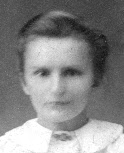
One hundred years ago today, December 1, 1911, my Baba (grandmother), Zsuzsanna Csornej-Maczko, boarded the S.S. President Lincoln in Hamburg Germany to sail for America.  Her journey to the US began about a week earlier when she departed on a horse-drawn wagon from her native village of Nemetvagas in then Austria-Hungary, bound for the nearest train station (likely Nagy Mihaly).  She traveled with sister-in-law Mary Szemjan, and a cousin, Mary Szorokacs.  Baba was an orphan who looked ahead to a better life in America.

Baba was 15, though the ship manifest says she was 17.  She added the 2 years for fear of being sent home by officials who frowned on very young women traveling without male company.  The voyage took 2 weeks, a little long for steamships at that time.  Ice at sea could have caused a delay.  There wasn't enough food in steerage so Baba took potatoes from the kitchen, the only time in her life she ever stole.

In addition to the 1500 passengers in 1st-2nd-3rd class, the President Lincoln carried 2400 in steerage

The three women listed on the ship manifest

The 3 women landed at Ellis Island, each with $17 in her pocket.   The manifest shows Baba as 5' 3", fair complexion, light hair, blue eyes.  All passed the health inspection.

Baba and her companions boarded a train for Pittsburgh, where they were to be picked up by Mary's brother, Mike Szemjan.  Only Mike was not at the station.  The girls spoke not a word of English yet managed to hire a wagon and driver for $5, to take them to Mike's house.  They spent quite a while knocking on doors in the Oakland area of Pittsburgh before they found it.  A few days later Baba's brother, Michael Csornej-Maczko, arrived from Snowden PA to bring her to his home.  She found work in nearby Clairton.

And 7 months later Baba's brother Michael arranged for her to marry Janos Bubnas, on 20 Jul 1912.  She had just turned 16 and he was 20.  It was an economic necessity for her brother to shed himself of the extra mouth to feed.  Baba was unhappy about the marriage at her young age (in the old country she would have been 18-20 in an arranged marriage).

They went on to a difficult life and eventually had 8 children.  Grandpa worked in the coal mines while Baba ran the farm and family.  They buried a child, sent 4 boys off to war, struggled through times of mine strikes and slumps in demand for coal, and then Baba became Grandpa's constant caregiver after he was crushed and paralyzed in a mine accident in 1951.

I'm deeply appreciative of the courage and resilience of both my Grandparents.  I deeply admire them for prevailing over copious disadvantages and working through complex hardships.  They gave their children and in turn their grandchildren, a wonderful life.  Grandpa died in 1966 of cancer; Baba died in 1996 at age 100.

Tuesday, November 29, 2011

Sorrow Engraved in Stone

Yesterday I came across the rural Wilford Idaho cemetery while driving through the countryside.   And I saw this stone:

In 40 years of doing historical and family research, I have never run across such a record of tragedy.   Thanks to internet resources, here are the important details I found about this family:

The father, Joseph Hyrum Kershaw was born in what is now South Africa. His family joined the LDS Church and migrated to Utah. There he met Julia Clift, a Utah native; they married in 1877. Their first child, Lydia, was born and died in Utah. After living in various parts of Utah the Kershaws moved to Twin Groves Idaho about 1889.

Diphtheria hit the area in the winter of 1897. It's a dreadful childhood disease. In addition to extreme illness, the child is suffocated by a thick membrane that grows across the airway. My Grandma lost a child this way and once described his suffering to me. Horrible.

Over a two-week period the Kershaws buried all eight of their living children. The oldest was last to die, and had probably helped care for the others as they slipped away, one by one. In the dead of winter all were laid in the frosty soil of Wilford Cemetery.

The devastated, now-childless parents went to Utah to stay with family for a while. When they returned their house had been burned down by neighbors to prevent the spread of the disease.

Five more children were born to Julia and Joseph. Two of those died as infants, and the youngest child died at age 26. All told, this couple buried 12 of their 14 children. Their only two surviving children lived until the 1980s. Mother Julia lived until 1929 and father Joseph until 1941. Julia and Joseph were members of The Church of Jesus Christ of Latter-day Saints. Their knowledge of eternal family ties was a beacon of light in the midst of their acute pain and sorrow.


Monday, November 28, 2011

Sugar City--Where Sweet Things Grow!


Teresa moved to Sugar City Idaho a few months ago. I love this place! I'm spending Thanksgiving here to assist Teresa with the girls while she finishes up her last semester of college (Jared is working in ND).

Sugar City is small town America: 1 gas station, 1 grocery store, a post office, a water tower, a volunteer fire department, a high school that draws from the surrounding rural area, 2 LDS church buildings, Ole's Cafe, a dentist office, a family-owned market, and a combination furniture-hardware-appliance store, also family owned. There's a pleasant, clean, small-town feel here. No McMansions, boutiques, traffic jams, chain restaurants, no fast food and no stoplights.
 
 water tower

 the only grocery in town

 The town underwent a huge change 35 years ago when the Teton Dam gave way and all but washed Sugar off the map. For that reason almost every house in town is modern. Old farm houses still stand in Teton and Newdale, but Sugar was smack in the middle of the deluge, so almost everything old was destroyed. With less than an hour's notice of the dam break, people got out with the clothes on their backs, then had only a stone or concrete foundation to call home.

one of only a few survivors of the 1976 flood

center of town

Sugar's reason for being was the beet sugar factory built here in 1904 for the U and I sugar company. The town was built to accommodate the workers, and because of a labor shortage Japanese workers were brought in to help. Some of their descendants live here now. The factory has long been defunct and only 1 building of the complex still stands. Farming and ranching are still going strong. The high school team name is the Diggers, recalling the heritage of the sugar beet.
1904 sugar factory

My favorite walk here is to head east a couple of blocks to where I can see the mighty Grand Tetons rear up on the eastern skyline. The houses on that edge of town view this:

 Grand Tetons on a hazy November day

Sugar's only drawback is the wicked winter weather common to Eastern Idaho--wind, sub-zero temps, plenty of snow. But it's a nice place to raise a family.


Sunday, November 27, 2011

If You Are What You Ate in Childhood, Then I'm in Big Trouble


A distinct vision of my pre-school years sees me sitting at the kitchen table eating lunch with my Mom.    The colors of my lunch were yellow and white.  Can you guess what it was?    A banana with milk, or lemon yogurt with a slice of bread?    Sadly it was not anything that nutritious.  My daily lunch staple was a butter sandwich.  And golly it was delicious.  Mom sliced square slabs off the butter stick and arranged them on airy Weber's white bread, fresh from its blue and white checked wrapper.  The butter slabs were thick and cold and melted in my mouth.

It isn't that Mom didn't feed us well.   Junk food was limited and we ate plenty of fruits and some vegetables.  There was just so much that people didn't realize about food.  We sometimes ate twinkies and snowballs.  My kids never have.  We ate bologna sandwiches.  My kids never have.   When Mom or Dad was in a "gourmet" mood, they made us fried bologna sandwiches, one of the tastiest really bad foods ever.   We kids were mesmerized by the sight of the flat pink bologna frying in butter in the cast-iron skillet.   As it cooked the meat puffed up in the middle like a Mexican sombrero.  My sister Alice confessed that she recently made herself a fried bologna sandwich.  Wish she had invited me to join her!
Weber's white bread was served at our table every night and so was meat--we ate way too much beef.  Except we Catholics ate fish on Friday (usually frozen fillet of sole).  My Dad ate kielbasa supplemented with icky stuff like pickled pig's feet and other weird Hunkie food that I wouldn't touch.  Most vegetables served at dinner came out of the freezer section of Hughes market, or were courtesy of Del Monte cans.  Velveeta was the only "cheese" I knew.

On the humorous side, there is a portion of a butchered pig called the butt that is always served smoked.  It's very juicy, meaning it oozes fat.   On those twice a year days when our folks announced that dinner was smoked butt, we kids fell into paroxysms of wet-our-pants laughter.   My smart aleck brother once retorted, "no way you're gonna smoke my butt."

You can probably guess what we ate for breakfast.  We made extra sure to exclude any cereal with a shred of protein or fiber.  Top of my list were rice krispies and cocoa krispies.  Zero food value except for the milk.   I shudder thinking of all the worthless food I ate.   That includes (true confession alert!!) my favorite snack: dog biscuits.  Yup.   I would wait till Mom was busy, sneak into the small walk-in pantry and shut the door, then eat doggie treats right out of the box to my stomach's content.  It was a spanking offense and worth every bite.

As I said, if we are what we eat, or what we ate in childhood, I am in big trouble.  I have  hope that the last 4 decades of nutritious eating have reversed the ill effects of my childhood diet.


Saturday, November 26, 2011

The Most Beautiful Spot in the Most Beautiful Country


Think of Ireland, and you will visualize green--the moniker Emerald Isle was coined for a reason.  Myriad shades of green manifest themselves in fields, shrubs and trees, crops, mountain slopes, and the surrounding ocean is a deep aquamarine. What a velvety gorgeous land.
 Dingle  Bay

Half my ancestry comes from Ireland, almost all of it from the Dingle Peninsula, which is the furthest west point in Europe. In the days of immigration the residents had a phrase, "next parish, America," meaning if you went any further west from Dingle, you'd end up in America.  And my ancestors did just that.  Unlike the Germans or Scandinavians who arrived on our shores with funds to buy land in the mid-west, the Irish were a defeated, starving people. They arrived penniless and "sold" themselves to New England railroads or the cotton, paper, and silk mills.

Minard Castle after the English got through with it.  My 3rd gr-grandmother, Nellie Wren, was born circa 1800 up on the mountain in the distance 

 The Irish went from this (above) to this:

 The mills of New England
 
The Dingle Peninsula would have been a hard place to leave behind.  It was and is a land of white sandy beaches, towering cliffs beat by frothy waves, emerald pastures dotted with sheep and cattle, whitewashed cottages, ancient stone ruins, and colorful pubs.  These are sights not to be forgotten. 

 Inch

 ruins at Fahan

Castlegregory

 Annascaul

Annascaul

What heartache the Irish experienced as each cast a final glance at his or her beloved homeland, knowing they would never return to their lush Emerald Isle.  They found some solace in the US through association with others from their home villages. As the song goes: "I hear whisper of a country that lies far beyond the sea, where rich and poor stand equal in the light of freedom's day. . .where the cruel cross of England's thralldom never will be seen, and where thank God we'll live and die, still wearin' of the green!"  [from Wearin' of the Green]


NOTE: I am writing this while out of town for Thanksgiving.  I don't have access to my photographs, so all of the above (except the Lowell Mills) are borrowed from this website:
The Dingle Way website


Friday, November 25, 2011

We Love Quiet Waters


Quiet Waters Outreach (QWO) is a local Christian-based organization that provides enrichment for disabled adults and respite for their caregivers. Our family has been associated with QW for about 4 years, and would have been sooner if we had known about it.

About six or seven years ago one of Daniel's former special ed teachers at Westview High phoned to ask if she could visit with us. We had not seen Patty since Daniel's graduation in 1998. Patty's reason for coming over was to tell us about newer programs in place to help disabled adults, ones that had popped up since Daniel's graduation from high school. She explained this whole new world of helps and how to obtain them  (once you are dis-associated with public school services for disabled students, you lose a conduit of information). 

One of those she mentioned was Martha's Place, run by Quiet Waters Outreach in Tigard, Oregon. Martha's Place is a weekend "bed and breakfast" specifically designed for adults with just about any disability. Weekends run from Thursday evening to Sunday evening, and each has a special theme which can be anything from Rose Festival to bowling to photography to beachcombing. Up to six guests take theme field trips in the MP van. When they are not taking trips they are playing games, doing puzzles, or watching a movie together. MP bedrooms have decorative themes: the beach room, the garden room, the Trail Blazer room, and others.

Daniel loves MP.  He goes about five weekends per year. The staff is wonderful, the activities are fun, and he enjoys having his own special place to go. It gives Craig and I time off from the demands of care. We might go camping, do a project together, or just relax at home.

Below is a link to a new publicity video for Quiet Waters Outreach starring (in part) the Walkers. QWO depends partly on contributions from businesses and individuals to ensure they can continue to provide their services. It's eight minutes long--I hope you can watch the whole thing. If not, you can see us at @ 1:20, 3:47, 4:46, 6:36.

Quiet Waters video

UPDATE: As of 2018 the video is no longer available, but the link takes you to the Quiet Waters Facebook page.

Thursday, November 24, 2011

60s TV Commercials

I'm a child of the 50s and 60s. I probably watched more TV than my own kids ever did. Experts were not concerned about TV watching because kids still spent a prodigious amount of time playing outdoors with real live people.  


Programs were littered with incredibly inane commercials. Cigarettes commercials were a biggy and competition between brands was stiff. You look at some of the ads now and wonder how a marketing expert could think the absurd jingles and fantastic claims would snare a thinking person. But snare they did. Airtime must have been a bargain, given the length of the commercials.

These ads make 1960s Americans out to be half-wits.

Kids used to sing this one. And we all became smokers due to the catchy commercials--NOT!  Kent cigarettes: To a Frenchman, it's the Eiffel Tower, to a Dutchman, it's a pretty flower . . .

Not as snappy, but another Kent even stupider than the one above. I never smoked a cig in my life but my folks gave me the gift of secondhand smoke. And it was anything but "refreshing."  [Oops, this one isn't working today--try this: more doctors smoke Camels.

Hamm's beer anyone? Compare this one to the sophisticated beer commercials shown during Super Bowl.

Did you know Kool Aid is good for you? I heard it in this commercial. Check out the bangs on the younger girl. My Mom cut mine just like that. I look like  a dork in every school picture.

The 60s was the dopiest decade in history and this commercial for QT tanning lotion proves it. I used QT in 1966 just in time for 6th grade graduation. You see, I was embarrassed by my shocking snow-white legs. QT turned them shocking orange. Multiple vigorous scrubbings failed to wash it off. Oh the humiliation!

You won't see a TV commercial like this now--an advertisement for an automatic weapon and a snub-nose .38 revolver for kids!

The creepy: There's plenty wrong with this commercial and this product, Baby Laughs Alot, not the least being that it will leave you with terrifying nightmares. The laughter has got to be dubbed over.