Showing posts with label Books. Show all posts

Friday, January 2, 2026

Books 2025

2025 

NON-FICTION


Bloodlands***** by Timothy Snyder: An account of Stalin & Hitler's bloodlust and their countless victims. Books set in the WW2 time-period almost always focus on western Europe. This one tells us what went on further east. Lowly soldiers and helpless civilians were subject to two of the most depraved leaders the world has seen. The author focuses on the individuals, sometimes even by name (which is huge), who were caught in the horrible vise they would never escape from. 

One reason this book needs to be read is to understand the relationship of Russia to the countries around it, countries that were victimized by the depraved former Soviet Union. Ukraine comes to mind. It's eye-opening to learn that most of the victims of the evil regimes were not killed in death camps, as we tend to assume. 

The book is hard to read due to the horrors described, yet it's necessary. The phrase "never again" is appropriate here. And "never again" can only be achieved when we know what did occur in the past. It is not easy to comprehend how people can be punishingly brutal. Would my friendly neighbor next door act as a thoughtless executioner under war-time circumstances? Would my devoted husband? Would I? Someone's neighbor did, someone's husband did, and countless ordinary, average people did.


V13**** by Emmanuel Carriere: On November 13 2015 Islamic State terrorists attacked several venues in Paris in a coordinated attempt to instill holy terror in the French. And it worked. In cafes, a stadium, and a theatre people were gunned down and suicide bombers set themselves off. About 130 people were killed. What piqued my interest in the case was an experience we had in Paris in 2022. We were renting bicycles one morning in mid-city when suddenly a very long convoy of police cars and vans, sirens blaring, passed us by and pulled into a government building within sight of where we stood. The bike guy told us it was the defendants in the trial for that crime, who were transported every morning for that day's proceedings.

This book is not so much the nuts and bolts of the attack, like true crime often is, but focuses on the victims and their families. Memories are shared, and the magnitude of personal loss is overwhelming. Some of the perps are also highlighted. There were two who did not detonate their suicide vests. Why? Another decided to speak out as to why he did what he did, because the mother of one of his victims reminded him of his own mother. I couldn't put the book down.


Patriot***** by Alexei Navalny: Wow, what a tremendous loss to the world was the death of Navalny in 2024. Putin beat him to a pulp numerous times and Navalny always stood back up. Until he couldn't any longer. To think that Navalny voluntarily returned to Russia after Putin had him poisoned, to continue his quest to defeat corruption among Russia's elite, is amazing. He could have worked in safety from Germany, but no, he returned to give hope and deliver results to the Russian people, and that led to his death. He knew that would be the result, and he remained committed to exposing Putin for what he is. Everyone should read this book. If nothing else it will open your eyes to what goes on in Putin's world. God forbid that we in the US jettison the laws and safeguards that keep us from falling as Russia has. What a disgrace to give Putin even a particle of positive thought. And shame on any American who does.


Confederates in the Attic**** by Tony Horwitz: 2nd reading. I listened to this the second time in preparation for a trip to Mississippi and Louisiana. Written about 25 years ago, Horwitz traveled around the South, focusing on interviews with Southerners, including Confederate re-enactors. The leftover racist attitudes from the Civil War still shine brightly. Hard to believe that in this day and age parts of the country are still reliving the Civil War on a daily basis, at least when the book was written. Horwitz observed families training their very small children to grow up as good Confederates, to never forget the cause, to always remember the South was cheated and not allowed to govern themselves as they wished. As backward as parts of the South are now (at least by reputation), can you imagine how much more backward they would be if they had remained agrarian societies dependent on the labor of an enslaved population?

We made that trip to Mississippi in February 2025, visiting Vicksburg, Newton, Hickory, Gulfport and then New Orleans. In all the places we visited--a battlefield, museums, city buildings, and historic areas, we heard no one express strong opinions about the Civil War. And that was even though we spoke to a number of people about my husband's Confederate heritage and what happened in the area.The only sore spot we encountered, and it wasn't even sore, just a direct remark, was when we used the word "lost" to describe the South's loss in the war. No one there wants to hear the word lost.


Agent Zo***1/2 by Clare Mulley: Agent Zo was a young Polish woman who, during World War 2, became part of the Polish resistance, fighting against Germany. Poor Poland has been mistreated by its neighbors for centuries. Zo risked her life to do anything she could to save her country. It was unusual for a woman to take part in the things she did, but she insisted, and her challenges did not end after the war. The Soviet-dominated regime in Poland imprisoned and tortured her. It wasn't until years later that her amazing story came to light.

I believe this is an important and inspiring book. Sometimes it seemed to bog down though.


Trail of the Lost**** by Andrea Lankford: The author is an experienced forest ranger who participated in search and rescue operations during her career. She became interested in the fate of three male through-hikers who disappeared from the Pacific Crest Trail (PCT) over a short period of time. She got involved with their families and with others who contributed a variety of talents to help find these men. The author describes the frustrations the families experience as do-gooders claimed they saw one of the men on the trail, or do-gooders who claim they have invented cutting new technology to detect their loved one's DNA from 30 miles away by using finger nail cuttings from family members. Yeah.

It's a heartbreaking situation when a friend or loved one vanishes in the wild. On a 2600 mile trail, where should searchers begin to look? Dangerous terrain abounds, harsh weather threatens lives, wild cats and bears want to eat you, forest fires hamper hikers. Many through-hikers on the PCT are from someplace else and may not be adequately prepared to face the trek. And which of the billion trees or boulders are hiding a loved-one's body? 

I've hiked some small portions of the PCT in Oregon and it's an amazing experience through some fantastic scenery and terrain. Once while on a backpacking trip on Mt. Rainier in Washington, the Forest Service had set up a special camp next to where I was camping, to accommodate the PCT through-hikers who were diverted because of forest fires. There's not much level land on Mt. Rainier so this camp was in a punishingly steep area. These young-ish hikers came pumping up the hill with their mountain of gear on their backs, as easily (almost) as they would take a walk in the park! Another time I ran into a lone female through-hiker on the PCT and I was mortified that she thought hiking alone was a good idea. She reassured me by saying there are a lot of hikers out on the trails to help in case of problems, but in my mind a film played of all that could go wrong. And that includes falling off the trail, getting lost while going off trail for bathroom, sprains, broken bones, falling prey to animals (or people), and a number of other perils. All of that can happen even when you're with a group, but at least then someone will know to go for help.


In My DNA***** by Lindsey Wade: I loved this book. I have loved books about true crime since reading In Cold Blood in about the 10th grade. Learning about how DNA works, and its effectiveness in catching criminals is fascinating. The author was a Tacoma police officer, then a detective, then assigned to cold cases. A particular case haunted her, that of a girl who disappeared from a Tacoma park in the 1980s. She was found dead but her killer was not apprehended. But then he was, over 30 years later. The author had made it her mission to improve DNA collection among the criminal population, and to make sure rape kits got tested. Thanks to her efforts, current cases of sexual assault and murder as well as cold cases can be solved.


King Leopold's Ghost***** by Adam Hochschild: Published in 1998, I'm ashamed to say it has taken me until now to read this landmark book. Author relates King Leopold's desire for a Belgian colony, which ended up being his personal colony--the Congo--though he never went there. The treatment of the natives was not just horrendous--there are no words for how they were treated for the sake of extracting marketable resources to disgustingly enrich the king. 

As always at times when man-made tragedies are underway, good people step up to fight for freedom, justice, humanitarianism, etc. And that happened for the Congo and is detailed in the book.

Vachel Lindsay wrote these words in his poem The Congo:

Listen to the yell of Leopold's ghost,
Burning in Hell for his hand-maimed host.
Hear how the demons chuckle and yell,
Cutting his hands off, down in Hell.

Those charged with running Leopold's slave camps in Congo cut off the hands of any who failed to do the expected level of heavy manual labor. And now in hell, King Leopold can enjoy the same. 


Shoal of Time*** by Gavan Daws: A history of Hawaii. Written 50 years ago, minute details abound in this book about Hawaii's background. I didn't need to know this much, all the players, all the shenanigans, etc. yet it is good to have it all down for posterity. Hawaii is just another in a plethora of examples of how Western countries took advantage of natives in lands far and near. It was rich white men, the bane of civilizations around the world, who breezed in and took over. In Hawaii's case it was less a case of taking out everything valuable, and more maximizing what the islands could produce, notably sugar cane and pineapples. They imported disease and greed, dethroned the monarchy, and had no regard for the wishes of the natives or imported minorities such as the Chinese, Japanese and Filipinos. Part of that was due to the racist times.

A coda needs to be written to cover the last 50 years. The book ends with statehood in 1959. I would like to know more about how Hawaiians currently regard their status as an American state. 


The Siege***** by Ben Macintyre: What a gripping tragedy, and yet I never heard of it before. Part of the reason is that co-incident with this takeover of the Iranian Embassy in London in 1978, was the huge fiasco of the takeover of the American Embassy in Tehran. That went on for about 14 months and was the type of event that had us watching TV news every night for the latest information. 

Anyway, some Iranians took over the embassy in London because they wanted recognition for the Arabs who lived in Iran. They did not support the Ayatollah and they did not support the dissidents. They were looking for solutions independent of the well-known factions. As is common in takeovers of this nature, some of the perps came across as kind and caring and others as ruthless evil dudes.

Macintyre has given us excellent moment-to-moment detail on the siege.


Confronting the Presidents**** by Bill O'Reilly & Martin Dugard: I have a pretty good background in American history, and when I started listening to this book it felt too elementary and nearly abandoned it. But I kept on and ended up really liking it. Little known facts shed light on what made this or that president great or mediocre. How surprising it is that more than I knew were shameless philanderers, and of course we know about excessive corruption in some administrations. I say excessive, because every administration has its back-door deals.

Some of my relatives have railed almost violently at me for the differences in our politics. I am not registered with any party currently, but was a Republican for 48 years. Anyway, they practically blame me single-handedly for Biden and what an evil man he is and he's the most corrupt president in history, and the worst president in history, yada yada yada (not sure why that's my fault . . .). If they only knew. I explained to one how corrupt and destructive some of the past administrations were and they shut up then, but their ignorance of history was vast and laughable--obviously they were just blindly repeating what some talk-show host or podcaster told them. If the topic comes up again I'll recommend this book. It also a useful work if you slept through junior high and high school history class. This book will bring you up to speed.

Trump and Biden are not closely examined in the book. The authors feel not enough time has passed to have fair historical hindsight about them, and I agree. That's another factor in the current repeated claim that Biden was the worst president in history. You can't know for some years where he will stand on that ladder.


We Were Once a Family**** by Roxanna Sagarian: The details of the Hart family murders, and in turn, the American child protective services system are explored. The Harts were a lesbian couple that adopted six black children, and later drove them all off a cliff into the ocean. The children had been removed from their birth parents and put up for adoption for the good of their own health and welfare, and given to the Harts. But the author, a journalist who reported the Hart murders in 2018, is convinced the birth families were not given a fair chance to keep their children, or at least allow relatives to adopt them.

The system is overburdened, the birth parents are cut off from contact with their children, causing trauma for both, and not enough is done to understand and support the birth families which might prevent children from being taken away. All of this is true, yet in some cases that are reported, birth parents are given multiple chances to get their children back, and the children end up abused or dead. This is a "no-easy-answer," and a "one-size-does-not-fit-all" crisis.


Lincoln's Peace***1/2 by Michael Vorenberg: I've studied the Civil War but never thought much about how it all came to end. The signing of the cessation of battle at Appomattox only involved Lee's Army of Northern Virginia. There were other commands in other parts of the South that were surprised to learn of the event. As a result, the war continued in some areas for months afterward.

Some Confederate soldiers fled in Texas to regroup there, and others even planned to involve Mexico in the hostilities toward the US. In fact, some Southern planters even shipped their slaves to Texas in order to keep them away from Union troops and to make it more difficult for them to leave slavery, even though they were legally free.

States enforced laws differently, or even had laws unlike the ones "next door."


Original Sin***** by Jake Tapper: Wow, I don't even know where to begin. The coverup of Joe Biden's declining condition was deliberate, costly, dishonest, and worse than worse. We all knew he was declining, but then he would give a lengthy speech or travel across the world for an event or a meeting, not something most of my 80-year-old acquaintances could accomplish. 

I resented that some Trump supporters were sending me edited videos that made Biden look bad. That is so unhelpful and dishonest. I found myself searching for and sending them the unedited version of those videos, not because I'm a  Biden fan--I'm definitely not--but to stand for truth. I would do the same if I was sent a Trump video edited to make him look bad (and I don't even like Trump).

Yet I wondered what Biden was like behind closed doors. Certainly if he was incapable of being president, something would change.

Biden's advisors and handlers and many others who knew he should never never never run for another term kept their mouths shut, for the most part. And then when the truth came out in its full awful glory at the debate, it was too late for the Democrats to field a viable candidate. It's true that other presidents have been in less than presidential shape--Wilson, Reagan during his second term, and likely others--and it's always wrong to shield that from the public. The US has a system in place to take care of that problem. It's called the 25th Amendment to the Constitution.


The Last Days of Budapest**** by Adam LeBor: I'm fascinated by this book on multiple levels. First, it covers the earlier years of cosmopolitan, cultured Budapest, then moves on to the war years which make up the bulk of the book. I know a little about the fighting in some of the Eastern European countries. My grandparents came from the old Austro-Hungarian Empire over 100 years ago, and tiny bits and pieces of what happened there in 2 world wars have been told to me. And I have put two-and-two together to figure out the ways our family villages were affected during the wars.

Second, I listened to this as an audio book and absolutely loved hearing the pronunciation of Hungarian names and places. Most of them I recognized from having read them in old vital records, but did not know how to pronounce. My grandparents' parish records are partly in Hungarian (their Byzantine Catholic baptism records are written in that language, even though they were not Hungarians). I've also participated in indexing thousands of Hungarian records. 

Third, we spent a couple of days in Budapest a few years ago. One night walking along the Danube we ran across a war memorial in the form of casted metal shoes cemented into the concrete seawall there. We learned that when the Budapest ghetto was emptied in late 1944 that residents were herded down to the riverbank. They were tied up in groups by the Nazi soldiers, and then one was shot. That person fell into the river dragging others with them and all drowned. This method of murder saved on bullets. 

Less than two weeks after returning home from that trip, I saw in our newspaper that an elderly couple, Les & Eva Aigner, both survivors of the Holocaust, were going to give a presentation about what they experienced and what they witnessed during that time. In their old age they were speaking out so the truth would not be forgotten. Eva talked about her father being taken from the Budapest ghetto to work for the Nazis. Later, her mother was taken and put on a train to a concentration camp. When the train began to slow near the camp, she made a run for it. A German soldier chased her and held her at gunpoint. She threw herself on his boots and begged to be allowed to return to her 2 girls in the ghetto. He turned his back and she ran.

It took her a week to get back to the Budapest ghetto. When she arrived her girls were gone and the commotion of the execution of Jews at the river was frightening. She ran to the Danube and found Eva and her sister by hearing their cries. She took off her wedding ring and handed it to a German soldier, begging for her daughters' lives. He let her take them and they all survived.

This very scenario is covered in this book--that of the Jews being herded to the river for execution. Also covered is the deeply unpleasant business of the Red Army when it arrived in Budapest. While visiting Slovakia in 1997, I heard my Slovak female relatives allude to this terrifying event in their own towns and villages near the Ukrainian border. Shudder.


Thirty Below***1/2 by Cassidy Randall: The challenges faced by women climbers is detailed. In the olden days there existed powerful gender discrimination against females attempting to pursue a "man's sport." Women were weak, women would be hysterical in the face of trouble, women couldn't possibly hike or climb wearing all those skirts, etc. As the 20th century progressed, women went ahead and did it anyway, but they were shunned by the male climbing community. 

This book details an all-female climbing party striving to become the first such group to summit Denali, the highest point on the North American continent. Gender seems to matter less than some think when it comes to extreme mountain climbing. You're either built for it or you're not. You're well prepared or you're not. You're lucky or you're not.  
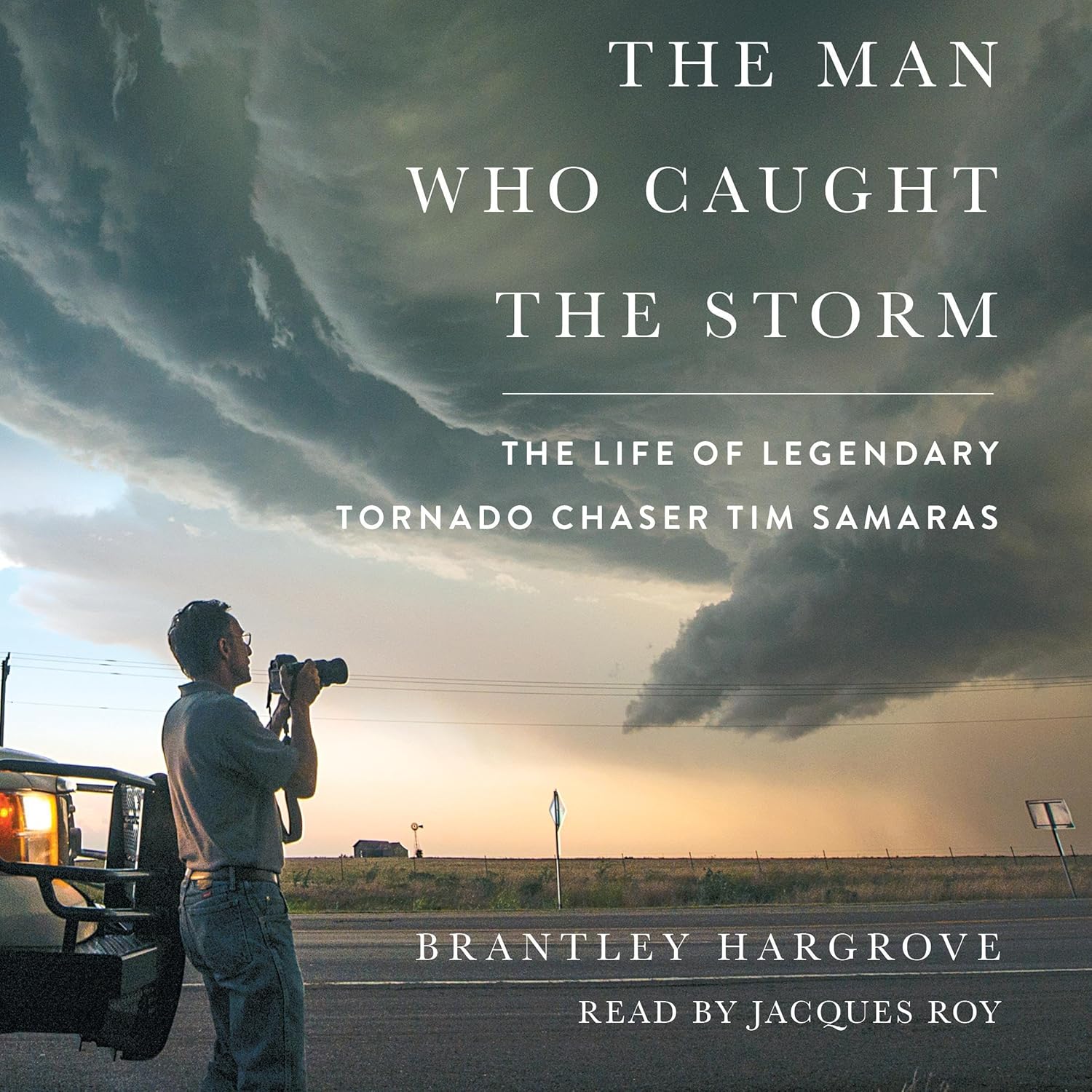

The Man Who Caught the Storm**** by Brantley Hargrove: The biography and adventures of a tornado chaser-- Tim Samaras. Without formal education, Samaras's obsession with tornados leads him to develop devices and methods to measure a tornado's characteristics for the purpose of scientific advancement. I've never understood how a tornado chaser is in the right place at the right time, and now I sort of get how they monitor the atmosphere so as to try to catch a violent storm. It's not an occupation for the faint of heart. Fascinating story.   


Survivors Club**** by Michael Bornstein:  Bornstein was a young survivor who made it out of Auschwitz after being hidden and guarded by his grandmother. Though he was only pre-school age, his memory of certain events is sharp. Serendipity placed him in the infirmary when the camp was emptied to become a forced march near the end of the war. He is convinced he would not have survived the march. His story combines his personal memories with research into details of what happened to Jews during the Holocaust years.


Grant***** by Ron Chernow (2nd reading-listening):  48 hours baby! Because July and August were so busy w/ guests and then camping and visiting family, it took me several months to get through this audio book. Author examines Grants life in deep detail, warts and all. His well-known drinking problem waxed and waned. 

What rarely seemed to wane was his lack of guile. He strived to live a life of rightness and fairness and trust. And that is why some corrupt individuals were able to enrich themselves right under his nose. And that has given a bad name to his "corrupt" administration, when it was not Grant doing the corrupting. His supposed trusted friends betrayed him again and again, at one point leaving him penniless in his later years.

Pre-Civil War Grant struggled to support his family. The military roles handed to him during the Civil War magnified his talents, and how sorely a gifted general was needed by Lincoln. He was rewarded for his esteemed military role after the war by wealthy benefactors, and eventually was "rewarded" with the presidency of the United States. 

Grant was a loving family man, honest and upright, humble, and never sought fame. I think Chernow's book has rolled all the things into one in this book.                                                                                                                                                                                                                 


                                                                                                                                                     Facing the Mountain***** by Daniel James Brown: My awareness and knowledge of the experience of Isei and Nisei (Japanese born, or American-born of Japanese descent) during the World War 2 years has been greatly expanded by this book. Not only were west coast Japanese and Americans of Japanese descent deported to work camps or concentration camps around the US, but thousands of their young men fought the Germans and Italians in Europe as members of the US Army. And that happened while their families in the US were still confined to the camps, having lost their freedom, their homes, livelihoods, dignity and self-respect. 

Because our country has not defeated the plague of racism, everyone must read this book or another than factually demonstrates the poison of racism. I can't fathom why a person would judge a whole group or race based on misinformation, or on the poor behavior of just a few of a given race. It's incomprehensible to me. And inexcusable.         


Pronoun Trouble*** by John McWhorter: The evolution of pronouns in our language, and in others, is examined. It's very detailed and not being a linguist some of the info was above me. He spends a fair amount of time on why saying, "me and Suzy went to the store" is not wrong, when those of my age were taught to never use "me" in that way. "Suzy and I went to the store" is my generation's style. 

Much time is spent on why "they" can be singular, as in someone asks to be called they so as to not denote gender. I don't have a problem with that except for one thing--it's hard for an oldster like me to remember small details like this, so if I met people in a group where some wanted to be called they, I'd probably mess up and call them  him or her.  So I would hope a person asking for "they" could not take offense when I forget. After all they are putting the burden on me to remember personal details, a burden I would rather not carry.                                                                                      


In Covid's Wake*** by Stephen Macedo & Frances Lee: Another post-Covid 19 book examining what we did wrong or right during the several years of the pandemic.  Lots of detail here. We now know that some of what we were told at the time was incorrect, or downright wrong. Some of it was right. Politics contributed to the confusion. 

I personally think it was wrong for people to be so rabidly critical in the early months, on how experts handled the pandemic. One day a theory about a way to combat it was put forth, and the next week or month we were told the opposite. But no one really knew much about the best way to treat Covid-19, yet some acted like experts should know it all on Day 1. It's true that most of Trump's followers think he handled the pandemic brilliantly, and I think his pushing the vaccine forward was an amazing feat. But I resent that he told the American people approximately 20 times that the disease would go away. Later he said he did not want to tell us the truth because we would panic, which is the ultimate insult from a leader. People tend to "panic" when they don't have information, not when they do have it. We deserved to know.


Waste Wars**** by Alexander Clapp: The truth, as the author sees it, about what happens to the waste generated in prosperous countries such as the US. It is shocking that even in our day of greater awareness that humans generate too much garbage, there is ample opportunity to be that unthinking person who discards re-usable items willy-nilly. I hear of people throwing away clothing because it's too much trouble to drop at Goodwill, or retailers like Costco whose products are often so over-packaged that trying to open one can be almost fatal. Many require a ripper that could slice an artery, in order to get the bleepity-bleep product out of its package. I have been in offices that keep a stack of those huge red solo cups on top of the water cooler. Someone takes a sip of water and throws away the cup. An hour later they are back for another sip out of another cup. Sheesh.

Anyway, much of the book concerns what is happening in poor countries that have agreed to take in our garbage. Paper and steel are very recyclable. But plastic is not, so much of it is burned just to get rid of it. The people in the area breathe in poisonous fumes, and their soil is sometimes made unusable as well. Most of us don't think a thing about this. We dutifully put items in our recycle barrel and never give it another thought.

Waste Wars is a short book with a lot to say!


Everything is Tuberculosis***** by John Green:  I read this book about TB because it took the lives of a number of my ancestors, and afflicted many in their communities. It's a disease more likely to affect the poor who live in crowded conditions. Three of my great-grandparents died of it--two were Irish, who tended to reside in small quarters with lots of relatives. Another was my Carpatho-Rusyn great-grandfather. He died at age 29, two months before his son, my grandfather, was born. He too lived in a multi-family dwelling. My own Irish grandfather lived most of his life with inactive TB that fortunately never developed into the disease. It was his two Irish parents mentioned above who died of TB before my grandfather was fully past his toddler years.

I did not know the level of suffering that comes to those dying of TB. It's called "the wasting disease" or consumption, for a reason. Victims lose their appetites, causing loss of weight and energy, and eventually death, although if you're lucky enough to live in a Western country, you are unlikely to die of it now. We have treatments that are unavailable in the poorest areas of the world. As it consumes the body, TB causes the sufferer to cough up blood as the lungs deteriorate. A patient has chest pain, sweats profusely, is chilled, and is breathless, eventually succumbing to suffocation.

The book profiles some TB victims who the author was acquainted with. This was actually quite moving, to come to care about these people who fought the disease. 


The Illegals***1/2 by Shaun Walker: I have watched plenty of spy movies and read a ton of spy fiction and non-fiction. And I lived through the decades when the threat of Soviet spies was on the conscious level of American thought. This book relates the extent to which the Soviets trained their spies and level of success and failure their infiltration became. Author gives personal stories of the extreme sacrifices their spies gave for the mother country. Near the end of the book he touches on virtual spying. That would be an interesting book to read.

Western countries in turn also had their spies. In the 60s I baby-sit for a neighbor family that had three small boys. At one point the husband went on business to Moscow, and that's shocking enough during the Cold War. But then his wife didn't hear from him for a period of time and was worried sick. Eventually he was found to have been very ill for a while and was confined in the apartment in Moscow. I wonder now if his "business" had something to do with a spy network. No evidence, just a thought.


The Sisterhood of Ravensbruck**** by Lynne Olson: Ravensbruck was a woman's concentration camp during World War 2. The author focuses on the interned French women who fought to survive there, and then follows them after the war until their deaths. They became a force for justice, exposing the treatment they had been subject to and working to bring the perps their due consequences. They stood up for the Polish women who had been experimented on by German doctors in ways that either killed the them or permanently crippled them. 

I had heard of this camp but had no idea that it's mission was to crush female enemies of the Germans. It's amazing too that the world pressured the Germans, first quietly and then loudly, to pay reparations to the Polish women who had been crippled and disfigured. Prominent Americans took up the fight and shamed West Germany until it paid up. Germany's excuse? It refused to send money to a Soviet country. Yeah, even though most people in that country were not sympathetic to the communist government. And the Polish women were victims, whether living under Soviet control or not.


The Emerald Mile**** by Kevin Fedarko: This is a history of the Colorado River Basin with emphasis on Glen Canyon and the Grand Canyon. Times have really changed. No longer could the Army Corps just decide to build a dam somewhere. I have dealt with public organizations that pretty much wear blinders when planning a project and seem to have little regard how it will affect the environment or the people who actually live in the area. So it seems with those that built the dams on the Colorado. They were men, and men build dams, and to heck with what anybody else thinks or wants.


The CIA Book Club**** by Charlie English: During the Cold War years a brilliant plan was concocted to bring open thought, Western thought, to the masses imprisoned behind the Iron Curtain. Creative ways were found to smuggle banned books into those countries, to give citizens opportunity to discover ways of thinking that were stifled under Soviet rule. Poland was particularly fertile ground, and we know how  the figurative "stone cut out of a mountain" rolled through that country and did not stop. Country by country freedom sprouted, some with violence and loss of life, others more gracefully. Having lived through it all, and appreciating the movement extra-much because half my Dad's relatives were oppressed in Easter Europe, this story is impressive.


Daughters of the Bamboo Grove***** by Barbara Demick: About the one-child policy in China through the eyes of those who lived it and of those who "saved" Chinese baby girls by adopting them into the US and other countries. Most shocking is the number who were stolen from their families by the Chinese state, as adopting them out was a lucrative venture. She portrays one particular adoptee who grew up in Texas not knowing that she was a twin, and that twin grew up in China in a family devastated to have lost one of their daughters. Heart-rending on several levels. And tragic to see modern China struggling from the long-term effects of the one-child policy.                                                                                                                                                                                                                                                                                                                                                                                                                                                                                                                                                                                                                                                                 

John & Paul*** by Ian Leslie: Two gifted musicians and songwriters gave us some of the world's most memorable music. Their story is remarkable, from their small gigs and varied band-mates to skyrocketing up to the pinnacle of the music world. Lennon & McCartney wrote and wrote and wrote and played and played and played. And there was fallout to come, and the book carries through to John's tragic death in 1980. What complementary talents those two were.

I loved hearing about the Beatles' early years and reflecting on the songs of my childhood and teens. The book was less interesting to me when the Beatles got weird, I mean, heavily into drugs and troubles. I don't care much for the music of their later years except for a few songs. 


The Peepshow*** by Kate Summerscale: A serial killer on the loose in post World War 2 London targets prostitutes and local wives. Another man is executed for one of the murders before a pattern emerges, indicating someone else was likely guilty. Creepy to think 'the man  next door' was a murderer.


FICTION


Death in the Air
** by Ram Murali: I thought that if I could tolerate all the "he paused," "she paused," "they paused" that this would be a good book. But I got about a third through before anything remotely interesting happened--a murder--and that wasn't much intriguing. I kept going past more pauses, more murders, but I was never at the edge of my seat, or enthralled by the mystery. I still kept going because of the rave reviews by people who apparently never read a well-crafted murder-mystery. Finish it I did though.


Orbital***by Samantha Harvey: I'm not a big fan of fiction, yet sometimes I give in to the urging of others to read certain fiction books. Though I can't rave about this one, it is so unusual, and beautiful in a way, that I actually did enjoy reading it. The author skillfully portrays what being in a space capsule is like, and she describes it so well that I had the pictures in my mind, seeing what the astronauts were seeing, and feeling what they felt. Her descriptions of the earth from space are so vivid and lovely. 


Twist*** by Colum McCann: Gosh, I don't know. The first two thirds of the book was intriguing as an unusual mystery was unfolding. A sort-of journalist was seeking a story about a company that repaired broken undersea cables, you know, the ones that carry data between continents. The journalist was aboard the repair ship, and was hoping to get to know the guy in charge. But that guy was elusive and mysterious. In the end, the book was about repair. Repair on every level. Repair of your spirit, of your relationships, and of the cables. Not so much a cut-and-dried ending as I expected, and would have liked better.


James***** by  Percival Everett: What an eye-opening, shocking book. James is a novel based on Huckleberry Finn, seen from the slave Jim's point of view. Even though fiction, the book sheds light on the life on an American slave. A must read--if you haven't read Huckleberry Finn, read it first, then this book.


I Cheerfully Refuse**** by Leif Enger: Enger never disappoints. A contented man's life is upended and he's launched on a journey of discovery? introspection? I call it an odyssey. He helps others and discovers more about himself, and he does good in the world.


Tilt*** by Emma Pattee: A very pregnant woman is caught in "the big one," a phrase we used in the Pacific Northwest to represent a future event that we all hope we don't live to see--a 9-point something subduction earthquake off the coast of Oregon. 

The story takes us through the main character's life, her regrets, her uncertain future, and then the thing happens. On the one hand, the author fails to get across just how disastrous and horrible the quake will be. She talks about people driving their vehicles, and I say, hello, the roads will be buckled and glass and debris will make the streets impassable, etc. She does tell us the bridges are down (and we have a huge ton of bridges, large, small and every size in between) and talks about death some.

I'm not a fan of profanity. To me it indicates a limited vocabulary by the writer or speaker. So I would have put the book down pretty close to the beginning except. Except, the author gave the very best descriptions of what it's like to be pregnant that I've ever read. I was enthralled by that. She left out the nauseous gushy part about how special it is to bring a new life into the world***, how pregnant women have a beautiful glow etc. etc.. Yikes, God forgot to give me the glow. Third trimester pregnancy is just painful, awkward, and limiting. The author captured this.
***I don't disagree with this at all, but the reality on a day-to-day basis is that is just a hard 9 months


The Nature of Fragile Things

The Nature of Fragile Things***1/2 by Susan Meissner: Story takes place at the time of the 1906 San Francisco earthquake. A young Irish woman becomes a mail-order bride and eventually finds out her husband is not the man she wishes he was. It's a good story, full of surprise and some intrigue.


Beartooth***** by Callan Wink: Loved this story. Two remarkably different brothers are trying to make it in life in rural Montana. Probably everyone who reads this can see themselves in one or the other of the men. Probably everyone will understand the realizations that come when one opens their eyes, gives others a chance. What kind of life could be in store for children of a free-spirited woman named Sacagawea? Now we know.


Fox by Joyce Carol Oates: I cannot recommend this book, period. I thought it was going to be a novel about a mystery, and it is, but I refuse to wade through vivid descriptions of child sexual abuse. Just can't. Just won't. Got maybe a dozen pages in to it before abandoning it.


Wednesday, January 1, 2025

Books 2024

-----------Non-Fiction----------


Carmageddon by Daniel Knowles: Cars are evil. And sometimes so are their drivers. That's one conclusion that can be made from this book. Knowles has tons of thoughts on how cars have messed up civilization, and how much damage they are causing to the environment. He shows how car manufacturers have practically brainwashed people into thinking they can't leave home unless they are driving a car. He insists citizens have been brainwashed into thinking that ALL transportation tax dollars should go to cars and to heck with those pesky bikes and pedestrians. They don't pay transportation taxes! We know that actually, they do. And besides, Transportation is not about moving cars, it's about moving people, says me. You can see I'm partly on the author's bandwagon. (And by the way, I once made that statement at a county public meeting concerning local transportation).

Remember the 60s song, "They take paradise and put up a parking lot . . .?" Well, "they" do. When I drive past the now-defunct Sears & Roebuck in Riverside CA, golly, it has Costco beat for a mega-parking lot. The author contends that we have made parking too easy, and it shouldn't be free. "If" a driver had to pay for parking--well, actually they do. Yes, the cost of each parking place is being borne by businesses and apartment owners who are required by cities to have certain numbers of parking spaces. But surprise, the driver is paying in the form of higher rents and retail prices. But if a driver had to directly pay for parking, he/she might be more inclined to take the bus or train. I know when I arrive in downtown PDX on the train, it's a thrill to step off directly into the city, not having spent 20 minutes looking for a parking spot, and not having paid 8 or 10 bucks for the privilege.

Author reviews the history of the automobile. It was once a toy only for the rich, and they wrote the rules. From then on cities, roads, etc. were all built around the car, rather than in a way to benefit actual humans and their neighborhoods. If you have ever had the experience "you can't get there from here," or, "you can get there from here but will have to go far out of your way to do it," then you know what I mean. Perhaps you have seen entire neighborhoods gutted because it was the best route for the new highway. I have--as a child I remember the houses pulled down or moved elsewhere in order for the Hollywood Freeway to go through. Near my current house, in about 1980 Murray Road was widened from a homey 2-lane road to a 5-lane mega-road. Homeowners on both sides begged the state to raze their side of Murray, because they didn't want to be the ones left living on a wide, fast-moving road (the west side lost the battle). The neighborhood was decimated.

I have seen parents who live a block from the school load up their kids, drive them to school, and then drive back home. I have heard drivers rage about the curse of pedestrians and bicyclists, conveying the message that we should all be curled up in fetal position unless we're in a car. I once suggested to some relatives of mine that it's too bad we're not more like Europe, as far as not being afraid to bike and walk places. You would have thought I was going to repo all their cars and take them straight to the crusher. They were violently opposed to this terrible idea of biking and walking. Sheesh. (These are southern California folks, where cars rule and bikes have no place).

The author is pointing out a better way of life, and the book is well worth reading. He knows cars are not going to go away, and he has suggestions on how we can reduce our dependency.


Bad Bridget***by  Farrell & McCormick: Wow, have I ever been naive. My Irish ancestors were so straight-laced that it's hard to even find information about them. If they had led a life of crime like the women portrayed in this book, I would have by now fleshed out their personalities, known about all their relations, and could have visited the prisons they spent theirs years in. I just assumed that all Irish women were meek and law-abiding, like my own 'under-the-radar' ancestors.

I had no idea that at least in certain places, Irish women were as criminal as the Anglos who despised them. Assaults, murders, thievery etc. were familiar to many. So what motivated a good Catholic Bridget to cross the pond and transform into a ne'er-do-well? I would love to say it was desperation in the form of starvation, to feed their children, to allay financial struggles. For the most part it was none of the above. For some it was being trapped in a bad marriage. Others were attracted to life on the edge, just as happens now. 

Brattleboro Vermont was home to many Irish immigrants who began arriving in the 1840s to work on the railroad or in factories there. In all of my research which has included vital records of every type, court records, property and wills, intense study of newspapers, etc. I have seen very very little crime related to Irish women. There was Mrs. Dundon on the Vernon Road who, as newspapers describe it, held "orgies" at her home. In reality it appears that she simply over-indulged in drink and invited friends over to over-indulge with her. That is about the worst I have seen pertaining to these immigrant Bridgets. Oh, also Mrs. Long who had a running feud with some of her neighbors, but feuds don't thrust one into prison.


Oath and Honor**** by Liz Cheney: Here, Ms. Cheney has done her darndest to dissuade Americans from voting for Donald Trump in 2024. This is an important book. As y'all know she was part of the January 6th committee which meticulously examined thousands of sources over many months time, to uncover the truth of what happened on that January day in 2021. She has laid out, in a meaningful way, the case for not allowing him anywhere near the White House this coming fall, because that would legitimize his anti-Democracy actions, and even his law-breaking. And it would provide a path for him to once again, be the bull-in-the-china shop, a role he relishes. It's also a role relished by his base, who seem not to comprehend the long-term ramifications of throwing away what has made this country successful for almost 250 years. Must read. With an open mind, of course.


Emperor of Rome*** 1/2 by Mary Beard: If you have been waiting at the edge of your seat for a book to educate you on the phenomenon of Roman emperors, wait no longer. It's really quite a fascinating topic. We know the Hollywood depiction of Roman emperors dressed in their battle skirts and armor w/ arm braces and golden, plumed helmets. But really, no emperor walked around that way, and further, most of them hardly ever fought in battle. Many didn't last long enough to find all the good restaurants in Rome, let alone govern the empire. 

Beard does not go in chronological order, citing each emperors plusses and minuses and wars etc.. She addresses the reigns of emperors using more of a topical approach. We learn how they dressed, what they ate, how they governed, how the commoners reacted to the emperor's actions. It's super interesting, and next time you watch a Hollywood movie depicting a Roman Emperor, you'll know the true story.


Romney: A Reckoning***** by McKay Coppins: a must-read book! I loved it. I loved it not just because I have always admired Romney for speaking truth, striving to do what's best for the country--country over party--and bold enough to speak unpopular opinions. Some in Congress won't speak out, or even speak the truth, because that would impede their reelection. Never mind what's best for the American citizens they were elected to serve. 

The best part about the book is that the author had access to Romney's journals and some of his papers. He boldly expressed his thoughts and now they are there for all to see. It's unfortunate that because he is who he is, he could not be reelected to the Senate in 2024 because of the Trump faction in Utah. They are going to lose a morally upright person and get a more run-of-the-mill, or worse, Trump-worshipping politician in Romney's place.


A Day in the Life of Abed Salama*** 1/2 by Nathan Thrall: The lives of Palestinians living in the West Bank are anything but simple, anything but easy. This book follows a Palestinian man whose child cannot be located after a bus accident. The red tape, the disrespect, the frustration and pain, it's a way of life for them.


Vengeance Is Mine****1/2 by Richard Turley and Barbara Jones Brown: This follows the book by Turley and others, Massacre at Mountain Meadows, about the killing of 100+ members of an Arkansas wagon train in southern Utah, 1857. After the event, coverups by participants and church leaders created an atmosphere of suspicion and terror, and it got to be that people mostly shut up about it. It wasn't for many years that some of the perps were brought to justice. Only one, John D. Lee, was executed, and that was 20 years after the event. 

A friend of mine, who was born and raised in that area, told me that the reason her last name is L-e-i-g-h instead of L-e-e (identical pronunciation), is that the spelling was changed to distance the family from the above-mentioned perp. A story in her family says that the men in her family spent the time coinciding with the massacre, up in the mountains, in order to make sure they were above suspicion. In other words, they either knew, or at least had an inkling, about what was to happen. This is an unproven family story.

Read both books to get the full picture of the terrible thing that happened to innocent pioneers. That will give you context about why it occurred. No excuses though.


The Angel Makers*** 1/2 by Patti McCracken: The village of Nagyrev, Hungary, is the setting for this story of a mid-wife who made it her work to decide which men in the village lived or died. She flew under the radar for a while, but eventually the village whisperers made her actions known. Of course it's always wrong to take someone's life, but it's hard to feel sorry for a horrible man that beats his wife every day, and then keels over and dies of a "heart attack," which was actually poison supplied by the mid-wife.


The Decadent Society*** by Ross Douthat: 'Stagnation in society plagues our world' is the general idea here. But I don't know--doesn't every generation think the world is going to the dogs? Every generation thinks, "what is the world coming to?" Maybe we reach new lows as time marches on, but when would we rather live? During a time when death kept us company, when retirement was unheard of, or when you couldn't visit family because they lived a 6-month wagon ride away? Well, this isn't really a book review; the book was ok and Douthat is a well-known writer, so.


Exceptional**** by Dick & Liz Cheney:  The focus of the book is what some see as a disastrous Obama presidency. The book begins with a rah-rah tone, outlining the US's birth and progression, and our principles and marvelous documents. Though it's becoming more popular to dis our own country because it's imperfect, I am not ashamed to point to it as an amazing standard for the world (because, would you rather live in Sudan, or China, or Mexico, etc.?). The Cheneys are also not ashamed to point this out. I liked the book.


Washington: A Life***** by Ron Chernow, second reading: Extremely well-researched and written, Washington gives us the ups and downs, the successes and failures, the flaws and virtues of this unusual man. He was the right person in the right place at the right time--I don't believe in coincidences. Chernow has a way of writing that makes you feel you're in the room when events are occurring. 

The audio version is 42 hours long; the physical book is a brick. But no matter how long it takes, the book is worth every second you put into it.

Incidentally, my father was born and raised on land in Pennsylvania that was once owned by GW. GW bought the land, some of the finest he had ever seen, about 1770. He had a mill constructed on the land, and had an idea for the layout of a town, a town that was not officially brought into being until several decades after Washington's death. That mill was rebuilt in the 90s and is open for browsing and tours, in Perryopolis PA. My Dad was once a tour guide there!


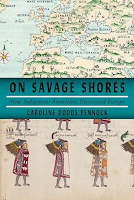
On Savage Shores by Caroline Dodds Pennock: DNF--I suspect this book is informative and interesting, but after listening to 10% I still wasn't into it and gave up. It relates the experiences of natives from the American continent who were taken to Europe beginning in the 1500s. One thing that turned me off is that the first part of the book focuses on how bad white Europeans were to the natives (true), how they stole their gold, forced them into slavery, and so on (all true). But I wasn't there, yet the narrative insinuated that it's all my fault, just by virtue of being a white European. Perhaps that isn't the author's intention, but it felt like it. She even got into how we mispronounce Montezuma's name, and even spell it wrong. I'm guilty as charged because I haven't put forth effort to unlearn what I learned in grade school, especially when it concerns a person who has been deceased for 500 years. In the next life, maybe.


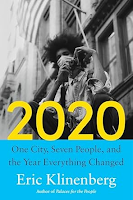
2020 ***1/2 by Eric Klinenberg: The author interviews a half dozen people from ordinary walks of life about their experiences living during the year 2020. Though Covid was the star of the show that year, an almost equal second was the US presidential race. He weaves in the way individuals stepped up to help during the confusion and fear, the misinformation that ran rampant, the social justice movement, and so on. I liked the book and appreciate reading someone's take on recent history. 


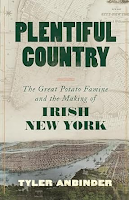
Plentiful Country **** by Tyler Anbinder: Love this book. I know plenty about the experience of early Irish immigrants to America, but the author focuses on the successes of the Famine Immigrants who immigrated from the Emerald Isle from 1845-1850. I have one ancestral family that I know for sure arrived during the Famine period--the Toomeys of Adrigole County Cork. Proof of their arrival date is the birth of a baby in Vermont in 1849. It's possible my O'Sullivans, O'Donnells, Cavanaughs and others came during this time also, though I don't see evidence of their presence until the 1850s, except my gr-gr grandfather Cornelius's brother--Matt Sullivan--shows up in Lowell Massachusetts in 1849.

Though most of my Irish ancestors were from the lower class (dirt poor and Catholic) somehow they had the means, or were given the means, to leave their beloved homeland. Though they did not immigrate to NYC, the focus of the book, through the author's portrayal of the experiences of the immigrants there, I could better understand my ancestor's trials and opportunities. 

My gr-gr grandfather Cornelius O'Sullivan married Catherine Cavanaugh in Lowell Massachusetts in 1855, but they shortly moved to Guilford Vermont where he worked in a slate quarry. Another year passed and they moved to Brattleboro VT. The only evidence I have of his work was that he was killed on the railroad tracks in 1877 while riding on a hand-car. He must have been a lineman. How Catherine got along after that I don't know. She was able to hang onto the house they had bought in 1870, and it passed to her children after her death in 1894.

Mary O'Donnell, my gr-gr grandmother, shows up in South Hadley Massachusetts in 1855. She could have been in the US well before that. She married John Toomey in 1859. He must have worked on the railroad, as they moved regularly, always up and down the railroad line. Their lives were filled with sadness. By the time she died in 1908 7 of their 9 children were deceased.

My Doyles and Ashes immigrated to Holyoke Massachusetts circa 1880. Tom Doyle, my gr-gr grandfather, ran a saloon from his house on Elm Street. Matthew Ashe, my gr-grandfather, drove a coal delivery wagon for Whiting Coal Co., and later was a pressman at his nephews printing business. If not for his and his wife's early death, my grandfather, James Ashe, would have had more chances in life. Poverty often follows death.


Island of the Lost*** by Joan Druett: The schooner Grafton wrecked on Auckland Island in 1864. It is located about 300 miles south of New Zealand, and is windswept and smashed by violent seas. With a crew of four and under the captain's leadership, the men built a living place, figured out what types of food were available, and made tools. Later, another ship sank off the coast on another part of the island. This larger crew fell apart. They failed to work together to save each other's lives, so most died. 


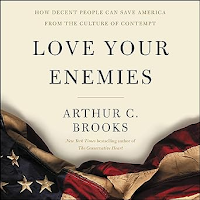
Love Your Enemies**** by Arthur C. Brooks: Brooks addresses the atmosphere and relationships in our time and says we have fallen into a "culture of contempt." He distinguishes this from anger and other negative emotions that we might think are the root of the problem. Contempt implies that we think very ill of those who believe differently from us, don't respect their opinions, and are convinced they have been brainwashed, etc. This has happened to me at the hands of one of my own relatives and it's deeply unpleasant--my relative will go to the grave calling me brainwashed because they refuse to have an intelligent conversation about our differences of opinion. The author is droll at times, which I enjoyed, and he has well-explained solutions on how to purge contempt from your own life, and help others to as well. A must-read book, read it now!


The Secret Life of Groceries***1/2 by Benjamin Lorr: The subtitle for the book is "The Dark Miracle of the American Supermarket." When we were raising our kids we spent time and effort picking our own fruit and vegetables and then canning, drying and freezing them. Among the reasons for doing so was that our kids learn that food doesn't grow on a grocery store shelf. And this author goes deep into that thought.

He touches on a variety of aspects of grocery store life--what it is like to work in one, how a product ends up on the shelf, the marketing aspect, and etc.


The Situation Room***** by George Stephanopolous: A must read--it's not long and it's gripping. Author goes through the history of "the sit room" over the past 60 years. He focuses on the political actions during well-known events such as the Vietnam War, Reagan's assassination attempt, 9/11, etc. Also described are how each president used the sit room, and how crises were handled. I loved this book partly because he shed light on the inner workings of the White House, and on little known facts about events I have lived through, and on personalities of American presidents. Highly recommend.


Wuhan Diary**1/2 by Fang Fang: It should be fascinating to hear a personal story of what went on in Wuhan China during Covid. I found it rather dull. Author lived through the lockdown and had much to say about that, but she spent a lot of time on other things such as how she was reviled in social media, etc. The book covered only the lockdown period and did not continue through the end of the Covid pandemic.


The Final Witness**** by Paul Landis: Landis witnessed the JFK assassination from just feet away, and it haunted him until even now. He was a Secret Service agent riding on the car following the president's when it happened. This book is his personal account of events of that day. He leads into it by detailing his life, and how he was eventually assigned to the role that put him where he would witnessed one of the heinous events in American history. Though I was barely 9 years old in late 1963, I remember the day well.


The Picnic**** by Matthew Longo: I love this book. It details the lesser-known events leading up to the fall of the Berlin Wall. I remember well the progression in the summer of 1989 that seemed to begin with Hungary opening its borders to East Germans, and that culminated in the blessed event of November 9--the fall of the Berlin Wall. There was much more going on than I knew. Author relies on personal experiences of ordinary people.


The Dreamt Land***** by Mark Arax: Growing up in a tract house in Southern CA surrounded by crop-land and  horse ranches, this is one of many eye-opening books that helped me see the incongruity of it all. Much of California is an arid desert, and yet it is also the breadbasket of America. Almonds, lemons, oranges, raisins, wheat, pistacios, rice, pears, plums, apples, grapes, avocados, cotton, and dozens of other water-sucking crops fill the landscape. Water rights have always been a source of contention in the West, and history shows us steal after steal after steal of water by powerful land magnates and major municipalities in California. 

This book focuses on the Central Valley (San Joaquin Valley), and takes hard looks at where water is coming from and where it is going and to whom it is going. And from whom it is being "stolen." Growers are the bad guys here, and they seemed not to care about anything but gaining enough water to grow whatever they want and lots of it. Almost no thought has been given over the last 150 years to what happens when a river, creek, slough or delta loses its water to the growers. 

What about the consumer? The book doesn't focus on the millions who depend upon what the growers produce. Thought may be changing as to which crops and how much should be grown. Would you as a consumer be willing to pay twice as much for almonds or grapes if the size of orchards and cropland was reduced to a more reasonable number of acres? Controlled production would hit our pocketbooks big time. Something to think about.

I loved this book. It is well-written and addresses a serious issue that needs to be recognized, and not only by those in Central Valley. California produce ships to every state, and around the world.


An Analysis of Jane Jacobs's The Death and Life of Great American Cities by Martin Fuller: What went wrong in the development of cities in the US? The author addresses Jacobs's thoughts on diversity, livability, transportation, safety, and what does and doesn't work in making American cities pleasant to inhabit. Priority is people, not cars. Even though it was written in the early 60s, her book is amazingly pertinent to today. I have definite opinions on how roads and communities should be built to maximize positive impact on people who live there. The antithesis of that is when development takes the course of "it has always been done this way," or "we must prioritize traffic flow." I spent about 15 months on a local ad hoc committee to improve transportation in our area. We had several notable, important successes, and now 15 years later I can see that it wasn't enough. We still have roads and developments that are hostile to those who live here.


Autocracy Inc.**** by Anne Applebaum: Autocracy has gone global. These systems connive together to "prove" that democracies are evil, they don't work, and there are better systems out there. With the webs they weave around this theme, they are able to deceive other peoples and governments, and individuals living in democracies. I have actually heard Americans say, "Democracy doesn't work." And sometimes they add "Just look at how bad our lives are under this system. Groceries cost too much, people can't make a living wage, our rights are taken away because we have to wear masks" etc. etc. If they only knew. They forget that we have groceries on the shelf and we aren't carted off to jail if we express dissatisfaction with our government. 

The desire for power and wealth can be fulfilled by those who are ruthlessly skilled in deception and have the charisma to persuade unthinking citizens to fall in line with them.


Dereliction of Duty**** by H.R. McMaster: This is an analysis of how the US became trapped in the Vietnam War. It's good that someone wrote a detailed well-documented book about the goings on that were not generally or publicly known at the time. The lies and the deceptions are disarming. The American people deserve(d) better.


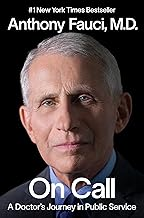
On Call**** by Anthony Fauci MD: This is Dr. Fauci's memoire and I enjoyed it because I admire him for his life-long work in fighting infectious diseases, and the dignity he showed when under fire by largely-ignorant people in 2020-2024. He chronicles his early life, and early married life, and makes them sound ideal, even to the point of having time for leisurely family dinners and fun activities when he and his wife were both working full-time (and more than full-time at times) and she was also a fuil-time PhD student. But ok. The rest of the book details his medical career, and much of the book focuses on his fight against HIV/Aids. i was moved by his deep dedication to the victims of this horrid disease. He covers Ebola, SARS, MERS and other diseases and I found it quite interesting to know how fighting diseases works out on the world stage.

Most interesting to me is the part about Covid. Fauci was the face of the fight against it. He was blamed for so much, including making a big deal out of nothing, flip-flopping on mask-wearing, closing down schools and public events, etc. Truth is, he, like every other scientist, didn't know everything about the disease on day one. 

Once Covid became a political issue, it got even worse. He and his family, even  his kids, were the target of awful expletive-laced anonymous phone calls and death threats. Even at the time, I thought it weird that his detractors expected him to know every single thing about Covid from the beginning. And, Fauci is not a politician, does not hold political office, and so is not in a position to shut down the country. That was Trump and his crew, and then the governors in each state.


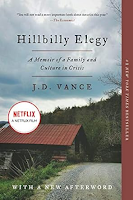
Hillbilly Elegy***1/2 by J.D. Vance: I'm not a Vance fan, period. I strive to broaden my horizons, and this book did. The stereotypes about "hill people" are at least partly true in Vance's family. Instability, revolving relationships, under-employment, drug use, violence, and other self-destructive behaviors plague this slice of society in his native areas of Ohio and Kentucky. Vance doesn't seem to shy away from admitting his family's flaws. The miracle to him is that he and his sister escaped the terrible cycle and lead good lives, and he attributes that to the support system of decent extended family who stepped in to keep him from being lost. He does blame some government policies that don't understand the traps that the poor are in, and thus make situations worse. 


The Four Tendencies**** by Gretchen Rubin: This was a book-group read, otherwise I wouldn't have picked it up. BTW, my book group was started in 1983 by a marvelous group of empty-nester-age women, all of whom are now gone. I didn't join until the early 2000s, and we have soldiered on, meeting 5x a year (every other month except July).

Anyway, I liked the book. Author has created four tendencies: Upholder, Questioner, Obliger, Rebel, which describe human personalities. Then she goes into detail on how each type of person (and of course there are cross-overs and blends) looks at life, and how the rest of us can learn to see life the way another's life sees it. 

It's a great theory and can help a person like me to appreciate my husband's and kids' various ways of seeing and doing. For example, my husband is clearly a Questioner. Sometimes I"m embarrassed by how long and deep his questions are, say at the doctor's office. What seems obvious to me is not to him, or you could say, he needs to hear answers from the source, and not just assume something. I myself am an Obliger, which certainly many mothers have to be. Everyone else's needs and schedule come before my own--or at least they did when the kids were at home. I've broken the mold somewhat, which is good. If I want to go for a walk on a beautiful afternoon at 5:00, I tell the others in my house that I'm not cooking, they can root around for something to eat.

I recommend the book because it's good for all of us to understand how the next person thinks.


Reader, Come Home***1/2  by Maryanne Wolf: This is a complex book on some levels. Or maybe I just don't have enough background in the process of what reading is, and how it happens. I just read. The author is concerned about today's children going through the "deep reading" process, if I have worded it right. Children are bombarded with distractions and interruptions, and have many choices of activities. They may never learn to soak up syntax or understand thinking processes. And what about those with disabilities that make reading difficult in the best of circumstances. She advocates that at a young age--no later than grade 3, say-- children who need help must be identified. To leave that until later serves no one. The book provides much for thought.


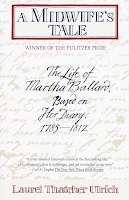
A Midwife's Tale by Laurel Thatcher Ulrich: This book goes with Frozen Snow which I've reviewed in the fiction section below. A Midwife's Tale is a presentation of Martha Ballard's actual diary from which the fiction book was created. Even though many of her diary entries are coded or terse, Ulrich is able to fill in the culture and practices of the time, and historical events (local and general) in order to give context to the diary. First person accounts such as this flesh out what society was really like at a given time. And this one being by a female gets down to the nitty gritty of daily life.


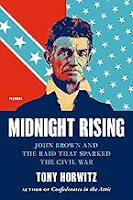
Midnight Rising**** by Tony Horowitz: I wish Horowitz had not died. HIs books are good and this is one of several about the South. The abolitionist John Brown has been an enigma to me. I never have delved deep into his life, but this book does, and has helped me understand why Brown did what he did, and the profound effect that his failed raid on the US Armory had on the slavery question. Brown's "contribution" to promoting the abolition of slavery cannot be discounted or minimized.


--------------FICTION----------------


News of the World***** by Paulette Giles, second reading: I love this book. It great to listen to the audio because they chose the perfect narrator, Grover Gardner, who has narrated other books I have enjoyed. An elderly man makes his living in 1870 wild Texas by traveling from town to town to read newspapers aloud to all who would pay a dime to hear it. He is approached by an acquaintance to please accept the task of a returning a 10-year-old white girl, who was a Kiowa captive for four years, to her family. That is, to her extended family, as her own was murdered in the raid that made her a captive. 

And so he sets off on a hundreds-of-miles journey to Castroville, Texas. The "unbroken" girl tests his mettle every step of the way, at first anyway. As they travel, the book conveys the landscape, the personalities they meet along the way, the confrontations with vagabonds and settlers in a vast, unsettled, unruled landscape.

The movie made from this book, which stars Tom Hanks, is also excellent. 


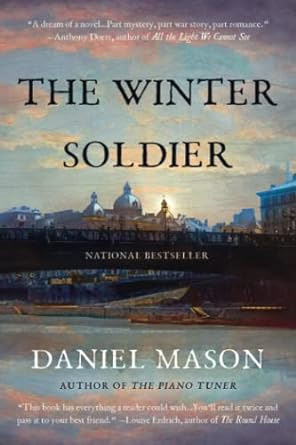
The Winter Soldier***1/2 by Daniel Mason: Loved this book. The setting is World War 1, yet it's different from most WW1 stories in that it takes place on the Eastern Front in what is now Poland and Hungary. Because half my ancestry comes from Eastern Europe, and I have heard of some of the places, I was intrigued. 


Chenneville**** by Paulette Giles: The same narrator as in News of the World, an excellent choice. He has a gravelly countrified voice that matches the setting and mood of other books set in rural areas in the 19th century, perfect for narrating an odyssey through the South after the Civil War......Excellent!

A badly wounded Union soldier makes it home only to find a distressing situation at there. Due to lack of manpower crops have not been harvested, everything is in disrepair, and then he finds out about the murder of some family members months previous. He sets off on a journey to find and punish the perpetrator. He meets interesting people along the way. 


My Father's House*** by Joseph O'Connor: Rome 1943. The Nazis are in control, people are afraid, people are starving. People who can are fleeing into neutral Vatican City. Father Hugh O'Flaherty makes his mission to find and bring into the city people whose lives otherwise might be forfeit--Allied POWs, Jews and others. Good book.


The Heaven and Earth Grocery Store**** by James McBride:  Pottstown Pennsylvania about 1930. Jews and Blacks lived apart from the rest of town, and sort of supported each other in their various endeavors, as they were both not part of the White Christian world that occupied the better part of town. The author did a good job of weaving normal struggling lives together in a realistic way. Both groups connived to protect a young Black boy from being taken to an institution by the State, and that plot is at the center of the book. Excellent story.


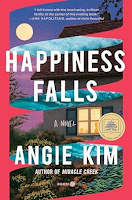
Happiness Falls**** by Angie Kim: A father of 3 disappears in the local park one day, and mystery surrounds the situation. That's the backdrop. The book is really about the family dynamics which are complicated because the youngest child was born with Angleman's Syndrome. Eugene cannot speak, or even express himself very much. The family loves him and looks after him. What they don't know, and don't find out until Dad goes missing, is that Dad has found an intriguing way to help Eugene. I was riveted. The down side of the book, and this is just me, is there are far too many F words in here, probably because the author thought it would be clever to have the daughter seem witty by speaking this way. It's stupid and usually I would just put a book like this down soon as I spotted the pattern. I mean, if an author had a character constantly saying something inane like "bananas" constantly, I would put that one down too. But there are few books written where a disabled person is a strong part of the plot. And being a parent and grandparent of a disabled child, it was worth it to me to forge ahead.


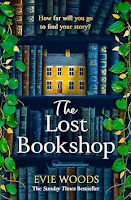
The Lost Bookshop*** by Evie Woods: An intriguing story about a number of people whose lives become woven together with the connecting thread being a bookshop lost to time. The time line runs from the 1920s until now. It's an intriguing story that involves strange happenings, such as books that find their way off the shelves, and a person who is eventually seen as imaginary, but who helps a young woman "find herself." The story is a little woo-woo, but I liked it.

The negative of the story is that I did not get the feeling of time passing. I couldn't tell how long it was between one event and the next. A day, a week, a month? There were no hints such as, "she trod through the snow," or "she ducked under an awning to escape the unbearable rays of the sun," etc.


The Women**** by Kristin Hannah: I was prepared to not like this book as so often I'm disappointed by modern fiction. But I couldn't put it down in the first half, and was still interested as it progressed. A young woman (Frankie) of wealth and status decides that tea parties, ball gowns and such are not for her. She got her RN degree, then enlisted in the Army as a nurse during the Vietnam War. Her brother had been killed there, and she wanted to make her place in service, so her picture could be hung on her father's "hero wall" in his study. The descriptions of the war, the medical treatment, the danger, the exhaustion and frustration is very real.

Frankie comes home unappreciated, or even reviled by family and the American public. Her father was ashamed of her choice and had told everyone she was away studying in Florence Italy, so. She suffers from what we now know as PTSD. It's painful to witness, and at times I just wanted her to see that alcohol and pills are not helpful. I know that, why couldn't she?

There are aspects of the book that are less believable. A number of times her two closest nursing friends hop on airplanes and show up to help. Nice, but not practical. I remember what a big deal it was to fly on a plane in 1970, and people did not do this often or casually.


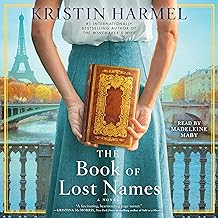
The Book of Lost Names*** by Kristin Harmel: A young 20s Jewish woman is caught with her parents in the drama of World War 2 France. She finds her way by working for the French Resistance as a forger of documents. The book also focuses on the present, her life as an old woman with tragic memories. The plot is great, and was enough to keep me engaged. The writing could be better. There are too many of those hanging phrases that living, in-the-flesh people don't really use. You know, the 2 or 3 words followed by silence that doesn't always get filled in: "you mean . . .??", "is it . . . . .??" "is he . . . .??" "what about . . . .??"  "how . . . .??" The other negative in the book is that the main character comes across as a bit dense at times. Too many things have to be explained to her and it gets annoying.


The Better Angels of Our Nature** 1/2 by S.C. Gylanders: A mysterious young soldier shows up at General Sherman's headquarters on the even of Shiloh, mysterious because he seems to know a lot about everything, and insists on serving the General even when he is rebuffed by him. Something is other-worldly about the boy, and the ending is just sort of ho-hum. It was a page-turner for a while, but it's about a third longer than it needed to be and by that last third I lost interest.


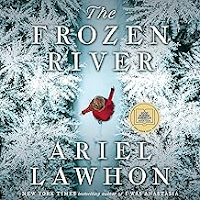
The Frozen River**** by Ariel Lawhon: A Maine midwife in the late 1700s becomes involved in village controversies which concern rape and murder. I liked this book a lot--the setting, the characters, the story. The protagonist is Martha Ballard, an actual midwife who lived in the time period of the novel. She faces heartaches and challenges, and at times has to face down greedy, lying men who have zero respect for women in general and for her in particular. Recommend. (NOTE: this novel is based on A Midwife's Tale)