Showing posts with label Slovakia. Show all posts

Thursday, November 2, 2017

August 21, 1968

Dad scooped the Los Angeles Times off our driveway every morning at 5:30. He and Mom usually had it read by the time the rest of us rolled out of bed. This day, August 21, 1968, was different though. We were all up by 5 a.m. preparing to attend cousin Charlie's funeral an hour south in Long Beach, California. Dear Charlie died on the 18th of August after several years of tragic decline due to ALS. He was Mom's first cousin. My angelic father had been the catalyst for getting our family down to visit Charlie almost every Sunday after church, despite the long drive to the nursing home in Long Beach, and later Fullerton, California.

We woke up to the above headline that August Wednesday, the 21st. Our eyes were sleepy, and that front page glared at us from the kitchen table as we ate our rolls and juice, putting a weighty damper on an already melancholy morning. The huge, bold type implies that Times readers should be and would be deeply interested in this invasion and its consequences, and maybe a few were. Our arch-enemy, Russia, had gone rogue again. I suspect that not many folks actually cared about Czechoslovakia, which wasn't exactly on the radar of the average American. Except for us, that is.

Dad's parents had immigrated to the US from the Austro-Hungarian Empire, now the Czechoslovakia of the bold headline, in the early 1900s. Over the decades what with a depression and two world wars, pinching poverty, Grandpa's long hours in the coal mines, the births of eight children, and then Grandpa's crippling mine accident in 1951, they had never entertained the thought of going back to the old country for a visit.

Sometime after Grandpa's death in late 1966, we had word that Baba was considering a visit home. Though her parents and siblings were deceased, she had nieces and nephews who were living, a few of whom corresponded with her. The 'Prague Spring' was warming. Why she did not just pick up and go is unknown. But on August 21, 1968, the opportunity vanished. I wonder now if she would have been trapped behind the Iron Curtain had she been caught in the invasion.

Then followed several decades of silence from her family in Czechoslovakia. I remember the significance of the first letter she received from her cousin Michael Ihnat-Mikula in the mid 1980s. The political climate was relaxing a bit, and he was able to reestablish contact.

After European communism tumbled, Slovakia became independent. In 1997 I traveled to  meet my Slovak family for the first time. A large group of cousins gathered at a home in Humenne to meet me. We discussed their lives and events of the past. The oldest person there was Irina Porochnava Bubnasova. I brought up the Russian invasion of 1968, and wasn't prepared for a wrenching emotional response.

Irina gravely recounted the grief and dread and terror of that August morning. Every woman who had endured World War Two was hysterical. Russian tanks crowned the hills around town with guns pointing towards homes, at these women, at their children. It was the world war all over again.

The vision of Russian soldiers seizing the town, and the women of Humenne reliving erstwhile terrors in their minds, brought forth tears. I couldn't and wouldn't ask Irina about the terrors, but am pretty sure that the same horrors of war going on today in Syria or Iraq are what went on then. My comfortable American self can feel sympathy but can never fully fathom the abominations of war.

Though the 1968 invasion stifled the wave of freedom behind the Iron Curtain, the Russian army didn't occupy long. Life in Humenne and the country returned to normal, albeit a harsher version of it. Less than 25 years later, the Soviet yoke was thrown off, and my family there now lives in light and prosperity and freedom.

City of Humenne
My grandfather was born in a village located on the upper slopes of Vihorlat, the mountain in the background


Humenne's town center

Sunday, November 24, 2013

An Arranged Marriage

when I think of arranged marriages I think of Tzeitel and Lazar Wolf and how the family wiggled out of that one 

That sounds so quaint--"an arranged marriage."  It  conjures up images of lace-bedecked veiled brides meeting their husbands for the first time at the altar. What a priceless experience to have been a fly on the wall on those occasions. Would the bride's expression on seeing her husband for the first time have been:

Relief?  (he's dreamily handsome and/or prosperous)
Revulsion? (the local skirt-chasing seducer)
Dismay and disgust? (weighs 300 pounds and/or intolerable BO)
Terror?  (previous wives died in mysterious unexplained circumstances)
Despair? (a passel of motherless children)
Crushed and crestfallen? (60 years old)

In my family "an arranged marriage" was a reality only two generations back from me. My own Grandmother, my Baba, was given away by her brother to my Grandpa, an immigrant Pennsylvania coal miner. Here are the earliest photos we have of them, from about 1918. They were married in 1912 but lacked money for a wedding photo.

John Bubnash
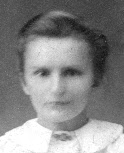
Suzanna Csornej-Maczko

Baba was not put off by her prospective husband. She had seen him around her home village in Eastern Europe. He was  handsome, five years older, and earning about what could be expected for a young 20s little-educated Slavic immigrant. Baba did not want to marry. She was barely 16; in the old country she wouldn't have married until age 19 or 20. She had been in the US for only six months. She worked a menial job and loved the power and independence. But her brother Michael was responsible for her, and had his own family to support. When Grandpa approached Michael to ask if he could marry Michael's sister, Michael gave consent and made arrangements, and there was not a thing in the world Baba could do about it. In Michael's defense, he was simply carrying on an old-country tradition. He knew of John from home and that he was a decent fellow.

The wedding occurred July 20, 1912, at the Byzantine Catholic Church in Clairton Pennsylvania. Rocky bleak times plagued this family: frequent moves as mines closed and workers were laid off, poverty, strikes, drinking, the death of a child, my Grandpa's peevish ways, overloaded lives when they ran a farm when Grandpa still worked a full shift at the mine, black lung, and the worst, Grandpa's crippling accident at Colonial #3 mine at Rowes Run Pennsylvania. That was the last day he ever worked as a miner. He was hospitalized for nearly a year, and paralyzed for good.

For the next 15 years Baba took care of her almost home-bound, almost helpless husband. The strenuous daily work took its toll, and it never got easier. Grandpa's health further declined when cancer took over his life. He died in 1966, 54 years into their arranged marriage.

Almost 30 years later I sat in Baba's kitchen, my cassette recorder running, asking questions about her childhood in the old country, and her experiences as a immigrant with a large family during the Depression and two world wars. In a very matter-of-fact tone she related the hardships of her life, and then focused on the intense and tedious care of my Grandpa in the years of his disability leading to his death.

After a lengthy pause she said, "Oh, how I miss him . . . "


Wednesday, November 30, 2011

December 1, 1911


One hundred years ago today, December 1, 1911, my Baba (grandmother), Zsuzsanna Csornej-Maczko, boarded the S.S. President Lincoln in Hamburg Germany to sail for America.  Her journey to the US began about a week earlier when she departed on a horse-drawn wagon from her native village of Nemetvagas in then Austria-Hungary, bound for the nearest train station (likely Nagy Mihaly).  She traveled with sister-in-law Mary Szemjan, and a cousin, Mary Szorokacs.  Baba was an orphan who looked ahead to a better life in America.

Baba was 15, though the ship manifest says she was 17.  She added the 2 years for fear of being sent home by officials who frowned on very young women traveling without male company.  The voyage took 2 weeks, a little long for steamships at that time.  Ice at sea could have caused a delay.  There wasn't enough food in steerage so Baba took potatoes from the kitchen, the only time in her life she ever stole.

In addition to the 1500 passengers in 1st-2nd-3rd class, the President Lincoln carried 2400 in steerage

The three women listed on the ship manifest

The 3 women landed at Ellis Island, each with $17 in her pocket.   The manifest shows Baba as 5' 3", fair complexion, light hair, blue eyes.  All passed the health inspection.

Baba and her companions boarded a train for Pittsburgh, where they were to be picked up by Mary's brother, Mike Szemjan.  Only Mike was not at the station.  The girls spoke not a word of English yet managed to hire a wagon and driver for $5, to take them to Mike's house.  They spent quite a while knocking on doors in the Oakland area of Pittsburgh before they found it.  A few days later Baba's brother, Michael Csornej-Maczko, arrived from Snowden PA to bring her to his home.  She found work in nearby Clairton.

And 7 months later Baba's brother Michael arranged for her to marry Janos Bubnas, on 20 Jul 1912.  She had just turned 16 and he was 20.  It was an economic necessity for her brother to shed himself of the extra mouth to feed.  Baba was unhappy about the marriage at her young age (in the old country she would have been 18-20 in an arranged marriage).

They went on to a difficult life and eventually had 8 children.  Grandpa worked in the coal mines while Baba ran the farm and family.  They buried a child, sent 4 boys off to war, struggled through times of mine strikes and slumps in demand for coal, and then Baba became Grandpa's constant caregiver after he was crushed and paralyzed in a mine accident in 1951.

I'm deeply appreciative of the courage and resilience of both my Grandparents.  I deeply admire them for prevailing over copious disadvantages and working through complex hardships.  They gave their children and in turn their grandchildren, a wonderful life.  Grandpa died in 1966 of cancer; Baba died in 1996 at age 100.

Friday, November 19, 2010

Skansen

I couldn't leave Slovakia behind on this blog without talking about the Skansen, or open-air museum, in Humenne.

A little more than generation ago it was realized that the traditional Slovak way of life had all but vanished. Before it was too late, preservationists established a museum where surviving examples of traditional buildings could be displayed. The buildings come from around the eastern part of the country and are representative of that whole area. The "crown jewel" is St. Michael the Archangel Byzantine Catholic Church, a wooden church built 1754 in Novy Sedlica.


Wooden churches were the earthy, humble vehicle for Ruthenian worship. Most Ruthenians (Carpatho-Rusyn) were shepherd-farmers who lived in remote hamlets in the Carpathian Mountains. They grew flax for linen cloth then intricately embroidered it, lived on a meager diet of coarse bread and a little meat, roots and tubers, hazelnuts and berries, did their farm work completely by hand, and didn't live long due to a harsh existence and frequent epidemics.

Inside the church was a loft for the women. Men stood on the main floor. There were no chairs or pews. The iconostasis is a screen that separated people from the altar, symbolic of the separation between God and man. Since man is unworthy to be in the presence of God, the only person who can enter the golden doors is the priest, who acts as intermediary. The icons taught the scriptures to illiterate peasants. The vibrant colors in the icons reflect the natural outdoors.

iconostasis

the golden doors,  icons

 a peek at the altar

The Byzantine Catholic Church separated from the Greek Orthodox Church about 300 years ago. The Byzantines follow the Pope in Rome, not the Patriarch in Constantinople. The liturgy has an exotic eastern feel to it; there is no Latin to be heard. Old Church Slavonic is chanted by the priest, the cantor and the worshipers. Priests are usually married with families outside the US.  

I've seen other wooden churches around the countryside but have only been inside this one. More than anything in this part of the world, these aging churches emanate the humble, earthy character and spirit of the Ruthenian culture.  I hope this one will last many more years to be appreciated by future generations.

Thursday, November 18, 2010

Poruba

My Baba (grandma) came from a village in Slovakia called Nemet Poruba.  Nemet or Nemecka means "German."   Poruba indicates "cutting" or "slashing,"  thus the axes in the village crest.  Wood cutting and charcoal making were the main money-makers here.  Jews were about 1/3 of the population and ran the businesses.  Gypsies lived here too but they were not integrated with the rest of the villagers.

Because it was located just below the Carpathian mountains, life was a little easier here than in Valaskovce where my Grandfather's family lived.  Lots of arable land meant reasonably bounteous crops and good forage for the animals.  Commerce was healthy because Poruba was easy to reach.  Though the village was burned by the retreating German army in December 1944, it was rebuilt and many of the same family names have been there for two centuries or more--Maczko, Csornej, Andrejko, Tovcsak, Csurpakovics, Kovacs, Ondrik, Ihnat, Mikula, Czuprik, Scserbak, and so on.

On Sunday morning we attended the liturgy at the Byzantine Catholic Church my Baba attended as a youth.  It's certainly more gilded now than it would have been a hundred years ago.

The nearby cemetery is very full of stones typical of Slavic graves even here in the US; photographs and laser etchings are very common.


I still have relatives in Poruba, probably more than I even know about.  Last month we visited with some of them.
Center: cousins L'udmila and Tatiana with their mother, Mary
Back: Peter and Lubomir
Front: Peter Jr.

Little Peter is adorable.   When I greeted him he shook my hand and said "Pleased to meet you" in the best English a 5-year-old could have.  Mary cooked a delicious dinner for us.  Afterwards we drove to the trail-head to hike to Morske Oko, a beautiful lake in the mountains.

On our next trip to Poruba we plan to find more family and do more hiking!

Wednesday, November 17, 2010

My Slovak Family

My Humenne cousins are a lot of fun; they're great cooks and hospitable in every way.  I have met all of them over the past 13 years but it took 3 visits to Slovakia to see them all.

They are all descended from George Bubnas, who was the oldest of the 5 Bubnas brothers of Valaskovce.

3 of those brothers, John, Andrew and Michael, immigrated to the US in the 1880s-90s and settled in Great Falls Montana before 1900 to work in the coal mines.  They eventually became ranchers and farmers.  Another brother (and my gr-grandfather), Paul, came to the US in the 1880s, then returned to Valaskovce and died of TB at the age of 29 in 1891.  The above-mentioned George Bubnas came to work in the Pennsylvania coal mines and then returned home to Valaskovce to inherit the family's land as the eldest son.  Most of his descendants still live there today.

Circa 1938 the Czechoslovak government claimed the land in the mountains where Valaskovce was located, for use as a military base where troops were trained in using tanks and weapons.  One reason it was a desirable spot for the military is because of its remoteness.  All the people in the village were relocated below the mountains to a newly built area of Humenne christened New Valaskovce.  Most of my relatives still live in that part of the city.

On our trip there last month Marian and Matus met us at the hotel; actually, they did that in 2002 as well.  We felt so welcome seeing family waiting for us!  Anna cooked a chicken dinner for us, Gabi we saw at the bakery, Magda provided us with pastries from the bakery, and Lucia--Lucia translated for us.  She speaks excellent English!

My cousins who live outside of Humenne in Modra--Eva, Jozef, Monika and Jozef Jr.--took care of us on our first visit.  I stayed with them and Monika went everywhere with me to translate for me.   We visited them during our 2010 visit and Monika still speaks great English and now has three children!  Eva cooked us some delicious halupky.  Jozef  and Eva are wonderful hosts.

My cousin Juraj's family lives in Prievidza, further west than Humenne.  They grow a huge garden every year.  We have enjoyed visiting with them at their home and through the internet.  All 3 children are now married and living in Bratislava.

2010
front: Ladislav Jr. and his girfriend,  Irina
center: Magda, Monika, me, Pavel Jr., Lucia
back: Pavel, Anna, Ladislav Sr.


 2002
seated: Marian, Ladislav
center: Marianna, Daniela, me, Gabi
back: Matus, Anna, Ratislav [?], Lucia, Ladislav Jr.

2010
seated: Ladislav, Zofia, Darina, Magda, Irina
standing: Viktor, Maria, Lucia, Villiam, me, Jozef, Anna, Janka, Eva

2002
Craig, Juraj, Veronika, me, Juraj Jr., Katka, Katarina

2010
Craig, me, Juraj, Katharina


Tuesday, November 16, 2010

Humenne, Slovakia

 The largest city in far Eastern Slovakia, Humenne is cradled in a valley created by the confluence of the Cirocha and Laborec Rivers.  To the south Vihorlat, an extinct volcano and the highest peak in the eastern Carpathian Mountains, towers over the valley.  My Grandfather was born about 2/3 up the north slope of Vihorlat.  The Ukrainian border is 23 miles to the east, Poland 20 miles to the north.
 Humenne with Vihorlat to the south (photo by Jan Kocak)

Humenne has been a town for over 700 years and was a small settlement before that.  For centuries it was the center of a vast feudal kingdom ruled by the Drugeths, then later by the Rakoczi and Andrassy families.  The manor house, or castle, built in the early 1600s still stands and is used now for offices and a museum.  My ancestors were serfs bound to the Humenne Estate until about 1850, but even later some were employed at the manor house.  Some of their surnames were Barna, Szorokacs, Bubnas, Kassai, Mihaly, Vadszita.  During most of its history Humenne was part of the Hungarian Empire yet much of its population was Slovak or Ruthenian with thousands of Jews and even some Romani.

Drugeth Castle, Humenne

Ruins of medieval castles are found in every direction fanning out from Humenne.  Some of these were already old and past their usefulness by the mid-1600s.  Revolts against the Austrian Hapsburgs took their toll on the castles.
 Brekov Castle (Wikipedia's photo here is way better than mine)

The town has seen local conflicts and destructive fighting from both World Wars.  On 21 Aug 1968 when Warsaw Pact nations invaded Slovakia, Humenne residents woke up to a shocking sight: Russian tanks were situated on high points around the city, guns pointing toward homes and businesses.  It was a time of fear and terror for people who already had seen much of that.
memorial near Snina

The first couple of times we visited Humenne (1997, 2002) it still felt like a backwater town that had not reached its potential.   An unfortunate building boom during the Soviet era filled the region with ugly concrete slab apartment towers. Happily though, in 2010 Humenne is a thriving city.  The central core of the city is full of new shops and businesses, a few hotels, and a very nice pedestrian park with fountains and a stage for musical performances. Optimism and prosperity permeate the air.  Even at 8 in the morning the pedestrian area was busy.  Further south more pedestrian areas are appearing making access to commercial areas more pleasant.

 Looking south along the pedestrian mall.

Humenne core 2010 (fountain emptied for winter)

Tomorrow: my Humenne family!