Showing posts with label World War 2. Show all posts

Saturday, November 10, 2018

Soviet Tears

hedgehog tank defense just west of Moscow

If you land at Shermetyevo Airport in Moscow, Russia and travel into the city, your route will take in the above monument.

The symbolic crimson-colored defensive barriers, called hedgehogs, mark the spot where the Soviet Red Army stopped Hitler's war-machine at the "gates" of Moscow, in December 1941. Axis forces had bulldozed their way north through the Soviet Union with several million soldiers, a movement known as Operation Barbarossa. Their ultimate goal was to acquire natural and agricultural resources to fuel their army, and to depopulate the western Soviet Union in order to re-people it with Germans.

By the time the Axis came within sight of Moscow in late 1941, winter was setting in. The bitter temperatures and heavy snow grounded the Luftwaffe and drastically curtailed the Axis movements. The Soviet counter-offensive drove them back from Moscow; the Axis never came close to taking the city thereafter.

The hedgehogs are ever a reminder of the firm, heroic stand made by Soviet troops. During five years of war, over 25 million Soviets, military and civilians, lost their lives, about 14 million of them Russians. Thanks to the Soviet people for stopping the German advance, the German bullets, with their own bodies.

In the Museum of the Great Patriotic War in Moscow is a special room that memorializes the dead. This solemn Hall of Remembrance and Sorrow shows a mother with her dead son, encompassed by "tears" falling from above. Perhaps at least one tear falls for each of the many millions whose lives were snuffed out by war. Add to that the tears shed by countless subdued visitors, and you have the most effective war memorial possible. If only tears could end war forever.


Read more about the Great Patriotic War


Wednesday, November 7, 2018

The Candy Bomber, or How Two Sticks of Gum Prevented World War 3


 [some of the following information was gleaned from an article in LDS Living; a link is given at bottom of page]

God has given us the ability, and duty, to heal and change hearts, minds and lives. He has confidence in his children's resourcefulness to serve and bless others as they creatively respond to the needs around them, and use their minds enlightened by inspiration to do His work.

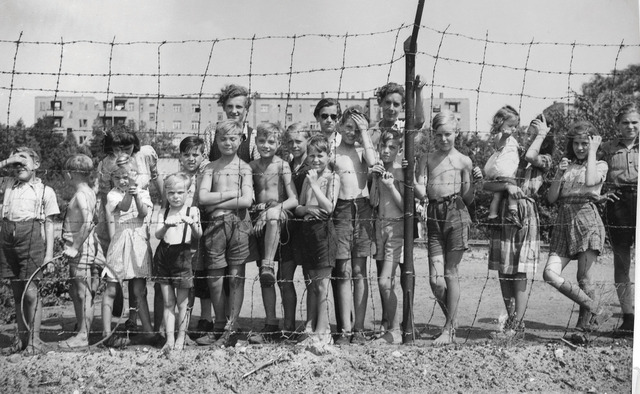
Lieutenant Gail Halvorsen magnified an inspired idea, the Berlin Airlift, aka "Operation Vittles," and changed lives and history. At that post-World War 2 time when Berliners were suffering under Stalin's thumb, American pilots, including Halvorsen, were dropping food staples behind the iron curtain from the same cargo planes that a few years before had flown in the war against Germany. Hunger was the enemy now. At the airbase, Halvorsen saw famished German children peering through the fence around the perimeter. He spoke to them briefly, then headed back to duty.


Gail Halvorsen
 [www.airfactsjournal.com]

"As Halvorsen bid farewell and stepped away, a prompting stopped him. He wanted to give these remarkable children something more, but all he had in his pocket were two sticks of gum. “I said to myself, If you try and give it to them, you’re gonna have a fight.” But it wasn’t Halvorsen who was choosing the way; he was being guided by the Spirit. “The reason I went back to the fence,” he shares, “was a prompting just clear as a bell. I know it was the Holy Ghost and no other source. It said, 'Go back to the fence.’ Just like it was typed up. It was clear communication.”"

He wanted to do more, much more than break gum into small pieces for war-scarred children. And so, building on "Operation Vittles," he began dropping candy tied up into little handkerchief-parachutes, from American planes flying their missions. The candy came from rations donated by himself and other American servicemen. Their ad hoc mission took on a life of its own. Americans at home began donating candy and handkerchiefs, and soon candy companies joined in, donating tons of sweets for German children.

"But there was always more to it than just the candy. Halvorsen remembers one instance when, 50 years after his candy-bombing mission, a man approached who said, “I’m 60 years old, and 50 years ago, I was going to school in Berlin. Clouds were really low, and it was raining. Suddenly out of the cloud and rain came a parachute. A fresh Hershey candy bar landed right at my feet.” The man continued, “It took me a week to eat that candy bar. I had it day and night. But the chocolate wasn’t important. The important thing was that somebody in America knew our troubles. Somebody cared. I can live on thin rations, but not without hope.”"

Hope. Good will and care turned into action by one man expanding on a great idea helped turn an enemy into an ally.

Halvorsen reminds us that our choices matter, and that we are entitled to inspiration to guide us, and in turn, serve others. ""Some kids get asked to try just a little puff of that stuff to make you feel good, and that’s a little decision," Halvorsen explains. "But if you put that bit in your mouth, you’re going to go down the trail and where are you going to end up? You’ve got to listen to the Holy Ghost who will put your footsteps on the path that leads to eternal life. That’s it. Bottom Line. You’re going to have problems in life, and you’re going to have dark spells, but if you’re in there with the little decisions to keep you in place, it’s going to bless your life and the lives of others. That little bit, those two sticks of gum, put me here.”"


LDS Living: read more here
Tom Brokaw's tribute to Gail Halvorsen is found here


Friday, February 3, 2017

Tragedy in Budapest Hungary, 1945-1946


 A page from Budapest, Hungary death records, 1946; Elizabeth Nobel was shot by a sharpshooter

I index thousands of records a year and most of them are straight forward births, marriages, deaths, obits, muster rolls and so on (if you don't know what Indexing is, click here).  Life's events play out on digititized pages that I download on my home computer.  It's all fascinating to me, to see naming patterns, occupations practiced in various areas, causes of death, and which ethnicities appear where and when.  It's a habit of mine to read between the lines and place the data into historical context.

Recently I was indexing Budapest, Hungary death records for the years 1945 and 1946.   The world war ended and recovery began during those years.  Well, recovery is hardly the right term for the immediate post-war period.  War-devastated European countries had years of turmoil ahead of them as survivors scrambled for food and shelter amidst the rubble of their former homes, searched for missing loved ones, and began the torturous process of punishing traitors and war criminals.

In the Budapest death records are causes of death that are not the usual tuberculosis, pneumonia, cancer, influenza and so on.  Using a weighty Hungarian dictionary given to me by a friend (a Hungarian-speaking former CIA officer) I have roughly translated these causes: shell wound; poisoning; self-sacrifice annihilation by explosion; bomb; explosion and fire; sharpshooter; Buchenwald (and other death camps); shooting by fusillade; aerial attack; explosion causing falling in (presumably the collapse of roof and walls); and execution.  Execution.  Execution.

For seven weeks beginning in late December 1944, the Siege of Budapest strangled the city.  As the one-million-strong Red Army tightened their grip, deaths from shelling and starvation mounted, eventually reaching nearly 40,000 in that short period.   In the area of Budapest where my indexing projects are taken from, the stretch from January 13-19 was particularly calamitous. 

 The arrows indicate the Red Army advance into Budapest in January and February 1945
[from www.flamesofwar.com]

The folks in charge of tracking and registering deaths were likely struggling for survival themselves.  Not until 16 months after the Siege of Budapest are the deaths from that time period entered into the register, interspersed among current deaths occurring in May, June and July 1946.  The war deaths are recorded in detail, even down to the time of day in some cases.  Where this specific information came from, I can't even guess.  And how many deaths were not recorded at all because no one knew what happened to the victims?   In wartime people disappear and bodies can remain unidentified. 

The pages in these registers show the Halasz family who died together when a shell hit their home on January 13, the Nobels, hit by sharpshooters on December 31, and Anna Perlak, who apparently gave up her life to set off an explosion in mid-January, perhaps at an arsenal belonging to the enemy.  The Reicher family home exploded on January 13, killing three inside.  A curious death is that of Alice Frances Meadows, age 64.  It doesn't give her nationality but she was in English teacher in Budapest.  She was shot down by a fusillade of bullets on January 5.  One wonders why she didn't get out of the war zone when it was still possible.  Surely her Allied connections would have been a ticket out of Dodge if she tried to leave early in the war.

The executions.  Almost all of these were Hungarian men between the age of 21 and 50.  The method or reason is not listed, but the time of death is.  It appeared that about every 15 minutes on some days in June and July 1946, executions were carried out.  Some of the men were married and / or had parents still living.  Did they collaborate with the enemy?   Steal food from their own troops to feed their families?  Perhaps they deserted the Axis lost cause and were apprehended after the war.

Budapest when the siege was over

Steeping myself in these pages brought home the tragedy of war.  Real individuals suffered tangible tragedy in one of the world's great cities.  Death did not discriminate.  Why this has to repeatedly happen to certain populations (or to anyone) is a question with no answer.


Wednesday, November 11, 2015

A Life Lost in Service


Andrew Bubnash was my grandfather John Bubnash's first cousin.  I don't believe they ever met.  After my grandpa immigrated to the US he remained in Pennsylvania for the rest of his life.  Andy's father and 2 of his uncles immigrated to Montana and lived there with their children for the rest of their lives.

Andy was born in Stockett Montana in 1905.  His father and uncles mined coal there for the Great Northern Railroad.  Once that work slowed down in the early 1900s the families moved into the big city, Great Falls, Montana.

Andy was married twice and to his first marriage was born a son Cecil in 1926 in Great Falls.

In July 1942 Andy enlisted in the US Army and became a medic.  Not much is known about his service until his death during the Battle of the Bulge.  Relatives relate that he was killed by a mortar round and died in the arms of another soldier from his hometown.  He is buried in Mt. Olivet Cemetery in Great Falls.

When the Army dispatched the telegram to inform the family of his combat death, it was accidentally sent to my grandparents in Pennsylvania.  They had to report that this was not their son--they had 3 boys on active duty at that time.  My grandparents suffered the dread and fear of opening the telegram, and then it was not about their son.  But it was someone's son, brother, father and husband.  I wonder how many families experienced the wartime agony of opening their door to a military telegram bearing tragic news.


Sunday, November 8, 2015

An Unanticipated Privilege


My Dad served on the USS Missouri (BB63) for several years, beginning with the shakedown cruise out of the Brooklyn Navy Yard in mid-1944.  It was an important and exciting time in his life, and he spoke about it regularly during my growing-up years.

In 1984 we took our children up to Bremerton Washington early one morning to tour the Missouri.  It was not yet mothballed but moored at the harbor there (6 years later it was back in action for the Persian Gulf War).  This was my first time visiting the "Mo" and I was riveted by the spot where the kamikaze hit the ship, a story Dad had related again and again.  What a thrill to see the special plaque implanted in the deck, marking the very spot where the treaty to end the war with Japan was signed on September 2 1945.


Tourists were not allowed below the deck which saddened me.  Dad had described the complicated innards of the ship to me, which I hoped to see someday.  He remarked on the extremely tight quarters where sailors' bunks were shoehorned into every available nook and cranny.

Every June during Portland's Rose Festival, the city is visited by ships that tie up at the harbor wall while sailors come ashore to enjoy the festivities.  In 1990 the USS New Jersey (BB62) was among that year's visiting ships.  Because its tall tower could not fit under the city's bridges, she docked further north in Portland's industrial area.  The New Jersey is a sister ship to the Missouri, meaning that they're pretty much identical.  I took our children down to the dock for a tour.  We marveled at the massive guns that could lob shells 20 miles inland, the bulging boa-like ropes and chubby cables, and the gigantic anchor with chains even Samson himself couldn't burst.  I enjoyed the tour but wished the general public could explore below deck.


Before the New Jersey departed Portland, I made a second visit with only 4-year-old Teresa in tow, to spend more time viewing the details of the ship.  She became my golden ticket that day to get below deck.

As we approached the ramp leading up to the ship, exuberant Teresa tripped and fell, scraping her knee on the asphalt which drew blood.  To me it was a routine childhood injury which I cleaned up with mama spit and kleenex.  The teenage sailor monitoring the visitors saw the wound and declared it serious enough to call up a medic.  The medic determined the raw red knee was in need of immediate attention and bade us follow him onto the deck, and then through the hatch-way to the depths below.  I had just won the lottery!

Dad hadn't been kidding, it was extremely tight below deck.   There were no stairs, only ladders leading down down down into the dim bowels of the ship.  We descended several levels, me negotiating the ladders with one hand, and my other arm tight around Teresa's middle.  A few levels down there was barely room to turn around.  Mr. Medic instructed me to lay Teresa on a short, narrow shelf squeezed into a hallway, and then he worked with great care on her knee, finally wrapping it with a huge bandage held on by what seemed like yards and yards of white adhesive tape.

While he worked I took in the surroundings.  Bunkspaces were sandwiched in between floor-to-ceiling walls of electronics.  I imagined the ship burgeoning with the 2000+ crew she could carry.  What a bustling place these decks must have been during wartime action.  Every sailor was assigned a shift and a particular job on that shift.  Each was a piece of a vital puzzle.   In times of emergency, such as when the kamikaze hit, it was all hands on deck as fast as they could get there.  The privilege that was mine to see the netherworld of an American battleship did not escape me.  And I have Teresa's blood and tears to thank for it.

 The Missouri and the New Jersey docked together

Sunday, November 17, 2013

The Mighty Mo

My Dad spent several years aboard the "Mighty Mo," the USS Missouri, or BB-63, during and after World War 2. My siblings and I grew up hearing the stories of the ship sailing through the Panama Canal (with only inches to spare), the big guns firing at the Battle of Okinawa, and the drama of the kamikaze starboard attack in 1945. We knew the treaty with Japan to end World War 2 in the Pacific Theater was signed on board the Missouri, on the very date my brother was born 11 years later. Dad had a scrapbook full of Missouri photos and information that I pored over again and again.

The Missouri was active in WW2, Korea, Vietnam, and the Persian Gulf War. In the mid-1980s the ship was docked up in Bremerton Washington. Early one Saturday morning my family made the 3-hour drive from Beaverton to take a ship tour. We saw the seal planted in the wooden deck marking the spot where the treaty was signed, and the spot where the kamikaze hit. I craned my neck to look at the conning tower from which Dad spied the approaching kamikaze.

In the mid-90s the decision was made to permanently mothball the battleship at Pearl Harbor near the USS Arizona. In 1998 the Missouri made a farewell voyage along the west coast of the US, stopping in various ports for a last hurrah. The day it docked in Astoria Oregon, I took Steven out of kindergarten to watch the ship cross the Columbia Bar and sail upriver to port. I expected all others would head to Astoria for a tour, and thousands did, but out there on the sandy riverbank we had company.  

Dozens of folks occupied camp chairs planted on the sandy bank of the Columbia River, in the area north of Fort Stevens. The thrill of anticipation was in the air as we all awaited the big moment when the Missouri would appear and glide past us. We spotted it downriver and it approached at a decent clip. When it reached our impromptu viewing section, we all stood in tribute as the majestic ship, guns thrusting skyward, passed on its final voyage. What a memorable moment of pride and patriotism for us all.

I plan to visit the Missouri at its berth in Pearl Harbor someday. 

A bit of trivia: the Missouri was selected for the signing of the treaty with Japan, because then President Harry S. Truman's home state was Missouri.


a modern view of the big guns

the "Mo" gliding through Pearl Harbor on its way back to New York after the war ended; Dad is on board there someplace

The famous kamikaze hit

The plane is barely visible at the top of this famous photo, left of center. The Japanese Zero and the pilot's body broke apart on impact; not much damage was done to the ship and no one else was hurt.  Captain Callaghan ordered a military funeral for the pilot. A Japanese flag was made up, and a rifle salute was given as the body was buried at sea. Dad said that not everyone on ship agreed with Captain Callahan's decision to give a military funeral to the enemy. Dad felt the Japanese teenager deserved the respect given. "He was a human being," Dad said.


I believe this is a view of the treaty signing

Dad's gravestone in St. Nicholas Cemetery, Perryopolis Pennsylvania

Friday, November 23, 2012

Unsolved Family Mysteries

When you have worked on family history for as long as I have, you are bound to run into intriguing mysteries, some solvable, some elusive, and some downright maddening.  Here's just a few I have solved or am still facing.

UNSOLVED
My Mom told me about the mysterious case of Tom Brosnahan, her father's cousin. He was in college at a Catholic seminary, and, suffering from intense overwork, came home for some R and R. He stopped by to visit Mom's family in Massachusetts, and after that was never seen again. Mom could barely remember this; she was born in 1926, so a likely time period for the disappearance could have been about 1930-ish. To this day no one knows what happened to him, despite the investigations done at the time. The police even dragged the river looking for a body. I have done some fishing, but without actually visiting Massachusetts and devoting days to searching police records and other public documents, it will remain a dead-end. As much as I yearn to solve the case of disappearing Tom, it would be a better project for someone who lives in the area and wouldn't have to rack up hotel bills and use vacation time.

UNSOLVED

Michael Toomey, my great-great-great-grandfather, came to Brattleboro Vermont from Ireland about 1848, and likely worked on the railroad there (no direct evidence for that, yet). His gravestone says he died April 9, 1870. Gravestone information is notoriously in error, but supporting evidence for that death date is in the town's tax records for that year, dated April 15, 1870. Michael's name is entered, then crossed out with "dead" added next to his name. But there is no death record for him found in Vermont at any time. I have checked all of the surrounding states and found no death record for him.  Such a record would give me his occupation and his cause of death, about which I'm very curious. 

SOLVED

 George, John, Andrew, Michael Bubnash

 My Baba told me that my Grandpa's father, Paul Bubnash, died when Grandpa was a baby (he was born 1891). Yet some cousins in Montana showed me a photo taken circa 1900 of four of the Bubnash brothers, and they were sure Paul was the one on the left. This info was passed down to them from the previous generation. My instincts trusted Baba; she was very good on details. I was sure Paul Bubnash couldn't have appeared in a 1900 photograph. Finally, about 1996 the parish records of Valaskovce, Austria-Hungary, became available on microfilm. I dove right in looking first for Paul's death. And yes, he died at age 28, before my Grandpa was even born. Two months before my Grandpa, his second son, was born, in fact. And who was the man on the left in the photo? My Slovak relatives tell me it's the oldest brother, named George. And that makes perfect sense.

SOLVED

My Baba also told me the circumstances of her brother Michael Csornej-Maczko's death. Briefly, Michael was living in their native village of Nemet Poruba during the war. The Germans marched through and forced the residents to flee or be shot. They fled to the mountains on the Polish border. When residents returned to the village they found it burned to the ground. Michael lit a fire for warmth, in what remained of the chimney. The Germans had planted a bomb in the shaft, it exploded, and Michael was killed.  o which war was this, I asked Baba. She just couldn't remember. She was near 100 years of age, and some details of things that had happened to other people had naturally faded from her memory.

In 2002, we visited Dukla Pass in Slovakia, the site of "the biggest battle you never heard of." Over 100,000 people were killed when the retreating Germans, pursued by the Russian advance, made a last stand at Dukla Pass on the  border between Poland and Slovakia, from October--December 1944.  Learning what happened at Dukla Pass was the key to solving the mystery of when Michael died. As I studied military maps of battles that took place in Eastern Slovakia, and read the rare accounts of people's experiences, everything fit for Michael's death occurring in December 1944 or January 1945, and definitely not during World War One. The pattern of the German retreat near the end of World War Two was repeated all along the front: banish or kill the villagers, burn the village, leave behind murder and mayhem. Baba knew Michael's death occurred in winter. Many innocents were killed during the fighting at Dukla Pass.

SOLVED

In the mid-70s I located a death record for my great-great-grandfather, Cornelius O'Sullivan.  He was 51, died in Brattleboro Vermont, and his death was listed as accidental. I was able to get someone in Vermont to check an the June 1871 Vermont Phoenix newspaper for a report on the accident. A terse couple of lines in the paper explained that Cornelius was "run over by a hand-car just above the West River Bridge." He lingered five days until his death. That's it.

Fast forward years later. Curiosity about what happened had been eating at me. I was in Brattleboro Vermont and found bound copies of an obscure short-lived newspaper called The Vermont Record and Farmer. This one shed more light.  Poor Cornelius was one of a group split between two handcars, who rode up and down the track checking its condition. He was on the lead car. It hit an obstacle large enough to cause a lurch; he fell onto the track and was run over by the rear car. His injuries were dreadful. About the same time, I discovered a handwritten piece of paper in an old book that had belonged to Cornelius's daughter, my great-grandmother, Mary. On it was written a list of terrible bodily trauma without any reference to whose injuries were described. I am sure they were his.

Mary Sullivan, daughter of Cornelius O'Sullivan

Thursday, November 10, 2011

The Eleventh Hour of the Eleventh Day of the Eleventh Month

Today's post is about a man I never met, and it is written in honor of our veterans, on Veteran's Day.  The source of my information is The Idaho Examiner newspaper, 3 Nov 1945.  I believe that was the Pocatello newspaper in those days.

Lt. Fred Siler is the man.  He was Craig's uncle.  On his return from over 3 years in Japanese prison camps, Fred gave an interview to the Examiner detailing the experiences he could bear to talk about. He had survived the 1942 notorious Bataan Death March and called it "a picnic" compared to what he later endured.
In late 1944 the Japanese decided to transfer the POWs then being held in Manila, Philippines, to Korea.  It was 45 days of hell, and only 310 of the prisoners survived out of the 1600 who began the journey.  They were put aboard a ship and this is how Fred described conditions:

 "The forward hold was jammed with 640 men.  We were packed in so that we couldn’t sit down.  After the first day we had no food or water.  The second night 40 men died of suffocation.  There was not a breath of air.  The only latrines were a few buckets.  We were so crowded most of the men couldn’t get to them.

"The second day out the ship was blasted by U. S. Navy divebombers.  We were bombed, beached, burned and sunk at Subic Bay on Lingayen Gulf.  The last bomb to hit the ship before it was abandoned blew a three-inch anti-aircraft gun into the center hold where 800 men were packed.  Many were killed and many others mangled.  The ones who tried to get out were machine-gunned.

 "We were left with no life rafts or boats.  The ship was burning but we weren’t allowed to leave until next morning.  The Japs set up parallel lanes of machine-gun fire at each end of the ship.  We had to swim the 600 yards to shore between them."

The survivors were put aboard a freighter which had been used to haul horses for the cavalry.  The horse stalls had not been cleaned.  The men escaped the bitter cold by covering themselves with the manure.

"We didn’t mind the smell.  More than two-thirds of the men were suffering from dysentery and smelled worse themselves."

After transfer to a third ship it too was bombed and scores were killed and wounded.   There was no water and the Japanese did not allow the men to aid the wounded.   

“The stronger men were detailed to throw the dead overboard.  We were so weak it often took four of us to lift the withered bodies over the rail.  We never knew who would be next.  Some sick and wounded lingered for two or three days.  Others died suddenly.  One day another of the healthy men helped me drop bodies overboard.  The next day I helped throw his body over the side.”

Lt Siler somehow survived the POW camp.  He said, 

“One of the surest ways to come out of prison alive is to have a real true friend.  You know that as long as he makes it, you will make it, and if you get through, he will.  Lt. Bill Akin of Lubbock, Tex., was my closest friend.  We entered the army together in 1941, took flight training, were commissioned, volunteered for the Philippines, fought the Nips side by side and were captured together.  We even had a mid-air plane collision shortly before the war but parachuted safely.  We were never separated until we reached the States a few days ago.”

He remained in the army after the war was over:

“I’m going to stay in.  The army has a lot of planes I’ve never had a chance to fly.”

On this Veteran's Day, 11/11/11, remember Lt. Fred Siler and thousands courageous men and women like him, who are and were willing to serve.


Thursday, November 11, 2010

Veterans Day 2010

I am skipping a day of Dubai posts to commemorate Veteran's Day, established as a tribute to the ending of World War One. The armistice was signed in France on the 11th hour of the 11th day of the 11th month in 1918. Here are some in our family who served their country:

 My Grandfather's cousin John Brosnahan, US Army World War 1.
Killed fighting the Germans at Fismes France, 19 Aug 1918.


Thomas Ashe (Grandfather's cousin), Irish Revolutionary. Commander of Fingal Battalion, Irish Volunteers. Fought the British at the Easter Rising in Dublin 1916. Condemned to death along with Eamon de Valera (later president of Ireland); both sentences commuted to life in prison. Went on a hunger strike to protest brutal conditions in prison, was force-fed by British resulting in his death 25 September 1917, age 33.

My Dad, George Bubnash (right), with a buddy on the streets of New York, 1942.
He was USN 1942-1947 and served three of those years on the USS Missouri in the Pacific.


 My father-in-law, Charles Walker, career USAF, World War 2


 World War 2 vets: Uncle Mike Bubnash (left), USN; Dad (center), Uncle John Bubnash, US Army Air Corps.
Uncle Mike was on a supply ship in the Pacific and twice met up with his brother George.
John's plane went down in the Philippines about 1944 so was MIA for about 10 days.


 My Uncle Bill Wasmuth, US Army in Europe World War 2


Uncle Jim Ashe, US Army in Europe World War 2


 Uncle Paul Bubnash, US Army Korea


Brother-in-law Barry Walker, career USAF, Desert Shield/Desert Storm


 Dad's Japanese Officer's Sword which he 'smuggled' home from Japan


USS Missouri heading home through Pearl Harbor 1945


Sunday, November 15, 2009

My Dad, a World War II Veteran

Dad on the Missouri, 1944

My father, George Bubnash, was born and raised in a little Pennsylvania coal town during a time when the coal mines were going full bore, coke ovens were stoked and glowing, and steel mills were blazing away. The Depression changed all that, slowing down work and leaving some miners destitute. Dad once said that FDR was the working man’s hero because of the social programs put in place to help the downtrodden. His mother hung a photo of Roosevelt in the living room.

Dad graduated from high school in 1939 and went straight to work in a New York restaurant--no coal mining for him. Two years later the Japanese bombed Pearl Harbor and when Dad’s draft notice arrived in 1942 he marched right down to the Navy enlistment office and signed up.

For the next two years he worked at the Naval Education Center at 90 Church St. in Manhattan. In 1944 he went to sea on a brand new battleship—BB63--the Mighty Mo--the USS Missouri. He was a Yeoman Second Class. He sat high in the conning tower relaying messages for the Captain. Going through the Panama Canal to the Pacific, he recalled that the Missouri was so large that there were just inches between her hulk and the concrete edge of the locks. The ship arrived at Pearl Harbor on Christmas Eve, 1944. Dad went ashore and was treated to a hot dog for Christmas dinner.

In 1944 and 1945 war escalated in the Pacific. The Missouri fired her 16-inch guns at the Japanese Mainland, Iwo Jima, and Okinawa and Dad was surprised he didn’t lose his hearing in all that din. In April 1945 a kamikaze hit did minor damage to the ship. The captain ordered a full military funeral for the pilot, including burial at sea under a makeshift Japanese flag and a 21-gun salute, because as he said, even the enemy pilot was a human being doing his duty the best he knew. Dad shed tears when he told this story, as did I listening his moving account of respect shown an enemy who was out to kill them.

The Missouri sailed to Leyte Gulf, Guam, and an atoll named Ulithi. Near the close of the war she served as Admiral Halsey’s flagship for the Pacific Third Fleet. The formal ceremony to accept the Japanese surrender was held on the Missouri, but Dad wasn’t present. His duty that day was on shore guarding officers on the Japanese Naval Base.

After the war Dad spent a few more years in the Navy and Navy Reserve. The GI Bill paid for the impossible dream of a coal miner’s son—college tuition to Carnegie Tech (now Carnegie Mellon). As his children were growing Dad quietly made us aware of his service during the war both on and off the Missouri. Those years spent doing his duty never faded in importance to him or to us.

In May 2004 I was visiting Dad at his home in Pennsylvania. The World War II Memorial was  opening that week in Washington DC. I prevailed on him to take a trip down to visit it—it took a lot of convincing on my part to get him there as he wasn’t feeling well. The area was a buzz of activity preparing for the tens of thousands who would be arriving in two days for the dedication.

The memorial is divided into two areas, the Pacific Theater and the Atlantic Theater, and each US state is represented. We saw elderly men with their children and grandchildren, doing the same thing we were. The photo below was taken in front of the Pacific Theater area where some of the battles he participated in are inscribed in stone.

As we were leaving a volunteer took our picture together. Then she put her hand on Dad’s arm and said, “It’s a little late, but thank you . . . thank you for your service.” We couldn’t speak for a good 10 minutes after that. Later I asked Dad if anyone had ever thanked him for his service and he said, “No.  No, I don’t think so.” But of course, he never looked for thanks. He was just doing his duty.  And when he passed away a few months later, an etching of the Mighty Mo was inscribed on his gravestone.

 World War II Memorial in Washington DC, May 2004


St. Nicholas Cemetery, Perryopolis, Pennsylvania