Showing posts with label Veterans. Show all posts

Friday, July 22, 2022

John Francis Brosnahan's Final Resting Place


Oise-Aisne American Cemetery; Block A, Row 39, Grave 6


Forty-some years ago while wandering through the Catholic cemetery in Brattleboro Vermont (my Irish ancestors are buried there),  I spotted a memorial plaque to a man named John Francis Brosnahan. Several marriages in my ancestral family are with Brosnahans, yet I had not heard of John Francis. The plaque reads:

BROSNAHAN 
In Loving Memory Of
Priv. John F. Brosnahan
Co. L   306 Inf 
Who Gave His Life in France
For His Country
Buried in Fismes, France

The family gravestone adjacent to the above adds more information: 

Sept. 9, 1887 
John Francis
Aug. 19, 1918

I dug right in to find more about John. He was born down the road from Brattleboro on a farm in Vernon, Vermont to Irish immigrants, Patrick Brosnahan and Catherine Brosnahan (yes, that's her birth name). Old issues of the Vermont Phoenix newspaper mention details about John's earlier life. He had an excellent school attendance record. He played football at Brattleboro High School and held down a job at Fenton's men's furnishing store. After graduation he took bookkeeping courses at Albany Business College and then found employment with Hall, Hartwell & Co. in Troy NY. According to the Phoenix, he made regular visits home to see his parents and siblings in Brattleboro. By 1911 he was living and working in New York City at Hanover Exchange Bank, and then at B. Altman & Co. department store. He remained single all his life.

Brosnahan received his draft notice in August 1917 and went into training at Camp Upton on Long Island on October 10. His rank was Private First Class in Company I, 306th Infantry, 77th Division. On April 16, 1918 he sailed for France with his company on the steamer Kashmir. 

By August that year American troops were facing German troops along their defensive lines at the Vesle River near Fismes, France. Full-scale battle was fought from August 3rd to September 1st with terrible loss of life. German howitzers were dropping shells among the American lines, hidden German machine gun nests poured fire onto advancing troops, and flame throwers were so effective that the town of Fismes was destroyed.  

On August 19th, 30-year-old Private Brosnahan was killed by shell-fire. His commanding officer, Captain Earl Marshall, mentioned in a letter to Brosnahan's mother that he was "apparently killed instantly by the explosion of a shell." My first thought was this simple explanation was to spare widowed Catherine any thought that her son suffered, yet the documents relating to his death use the word "none" in the space where wounds would be documented, indicating he probably didn't know what hit him.

John's last letter home, written August 3, carried the remark, "The soldier's life is a great life." We know that combat was fierce on French soil in the summer and fall of 1918. Trench warfare and constant shelling and sniper fire made a soldier's life horrible, but which man was going to confess fear and misery to his distressed mother at home?

Deceased soldiers were first buried in temporary ground near battle sites, and then moved to other accommodations as conditions allowed. Brosnahan's remains were moved several times until the establishment of Oise-Aisne American Cemetery near Fismes in the early 1920s. At this time families of the fallen were given the option to have their soldier brought home for US burial, or to be buried among comrades near where they fell. In this cemetery just over 6000 Americans were laid to rest, and though the specific reason for the Brosnahan family to make this choice is unknown, it was a common one. Tens of thousands of Americans are buried in France.

On our visit to Oise-Aisne we identified ourselves as family of an interred soldier. The superintendent -Bert- pulled out all the stops. He gave us copies of documents pertaining to Brosnahan's military service. Bert handed us American and French flags to plant on the grave, and carried a small bucket of damp sand from Omaha Beach as he accompanied us out to the grave site. He showed us how to rub the sand across the stone's inscription to make it more visible in photos, and we planted the flags in front of the grave, as seen in the photo below. I'm positive we are the first family members ever to visit Brosnahan's grave. Of all the things we did and saw on our European visit this summer. honoring a fallen soldier was the most moving and satisfying.

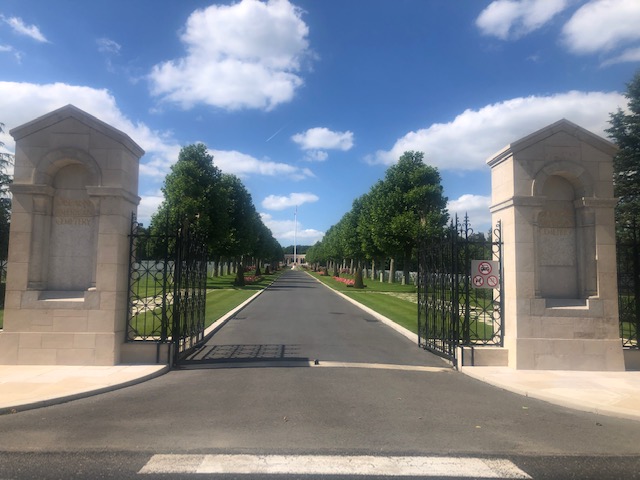


entrance to Oise-Aisne cemetery


a portion of the 6000 burials in the cemetery


map showing the various American divisions' participation in the battle; John Brosnahan was in the 77th Division


NOTE: for more about John Brosnahan click here

Wednesday, November 7, 2018

The Candy Bomber, or How Two Sticks of Gum Prevented World War 3


 [some of the following information was gleaned from an article in LDS Living; a link is given at bottom of page]

God has given us the ability, and duty, to heal and change hearts, minds and lives. He has confidence in his children's resourcefulness to serve and bless others as they creatively respond to the needs around them, and use their minds enlightened by inspiration to do His work.

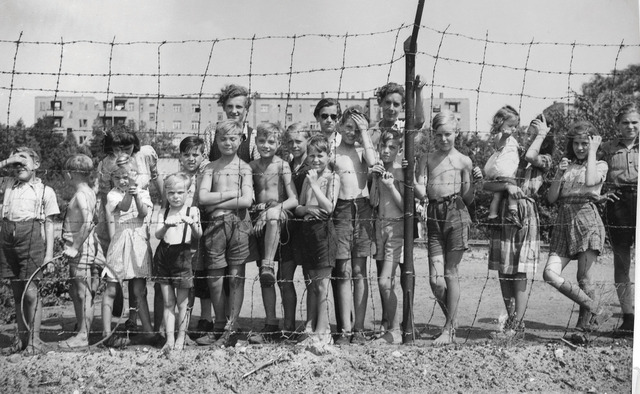
Lieutenant Gail Halvorsen magnified an inspired idea, the Berlin Airlift, aka "Operation Vittles," and changed lives and history. At that post-World War 2 time when Berliners were suffering under Stalin's thumb, American pilots, including Halvorsen, were dropping food staples behind the iron curtain from the same cargo planes that a few years before had flown in the war against Germany. Hunger was the enemy now. At the airbase, Halvorsen saw famished German children peering through the fence around the perimeter. He spoke to them briefly, then headed back to duty.


Gail Halvorsen
 [www.airfactsjournal.com]

"As Halvorsen bid farewell and stepped away, a prompting stopped him. He wanted to give these remarkable children something more, but all he had in his pocket were two sticks of gum. “I said to myself, If you try and give it to them, you’re gonna have a fight.” But it wasn’t Halvorsen who was choosing the way; he was being guided by the Spirit. “The reason I went back to the fence,” he shares, “was a prompting just clear as a bell. I know it was the Holy Ghost and no other source. It said, 'Go back to the fence.’ Just like it was typed up. It was clear communication.”"

He wanted to do more, much more than break gum into small pieces for war-scarred children. And so, building on "Operation Vittles," he began dropping candy tied up into little handkerchief-parachutes, from American planes flying their missions. The candy came from rations donated by himself and other American servicemen. Their ad hoc mission took on a life of its own. Americans at home began donating candy and handkerchiefs, and soon candy companies joined in, donating tons of sweets for German children.

"But there was always more to it than just the candy. Halvorsen remembers one instance when, 50 years after his candy-bombing mission, a man approached who said, “I’m 60 years old, and 50 years ago, I was going to school in Berlin. Clouds were really low, and it was raining. Suddenly out of the cloud and rain came a parachute. A fresh Hershey candy bar landed right at my feet.” The man continued, “It took me a week to eat that candy bar. I had it day and night. But the chocolate wasn’t important. The important thing was that somebody in America knew our troubles. Somebody cared. I can live on thin rations, but not without hope.”"

Hope. Good will and care turned into action by one man expanding on a great idea helped turn an enemy into an ally.

Halvorsen reminds us that our choices matter, and that we are entitled to inspiration to guide us, and in turn, serve others. ""Some kids get asked to try just a little puff of that stuff to make you feel good, and that’s a little decision," Halvorsen explains. "But if you put that bit in your mouth, you’re going to go down the trail and where are you going to end up? You’ve got to listen to the Holy Ghost who will put your footsteps on the path that leads to eternal life. That’s it. Bottom Line. You’re going to have problems in life, and you’re going to have dark spells, but if you’re in there with the little decisions to keep you in place, it’s going to bless your life and the lives of others. That little bit, those two sticks of gum, put me here.”"


LDS Living: read more here
Tom Brokaw's tribute to Gail Halvorsen is found here


Saturday, November 11, 2017

One Would-Be Veteran


We celebrate our veterans with monuments, parades, meaningful ceremonies and ponderous reflection, and I love Veterans Day with its national and local tributes to those who gave of themselves. My family doesn't have a steller military tradition, although my Dad and four of my uncles served in World War 2. Others of my family have been willing but were never called upon.

The World War 1 Draft Card below belongs to my maternal Grandfather. He was single at the time, was living in his Grandmother's house (she had died the previous year), and he did not have a promising employment future at this time. As the story goes, he and a friend went to enlist and Grandpa knew he was underweight. All the way down to the recruiting office he swallowed bananas, one after the other after the other. Didn't do any good. The Army wasn't interested in a skinny weakling I guess.

It is possible that my Grandfather had tuberculosis during childhood, and that could be the real reason he was not accepted into the service. Both his parents died of TB when he was young, and I know from his death certificate that he had TB sometime during his life. In any event, his spirit was willing to serve, but his flesh was weak. His son James served in the Army during World War 2.


Friday, November 11, 2016

Honoring Veterans

 Perryopolis, Pennsylvania War Memorial

In the area of my Dad's hometown (Perryopolis, PA) are plenty of has-been small towns that thrived during the era of the coal and steel industry,  but now appear listless and forgotten.  They are pocked by deserted buildings, including once-proud schools now derelict and crumbling.   Abandoned coal mines and tipples and mills of every type slump like skeletons stripped of their flesh.  Slag heaps overwhelm the landscape, an in-your-face testimony that these towns once had a reason for being.

Forlorn they may be, yet they have a grand, noble common thread: almost every town has a war memorial honoring their home-grown boys who served in past wars.  These memorials are not new; they were built after World War 2 well before the belated trend praising our veterans took hold.  The names on the memorials are more often Italian, Polish, Ruthenian, Slovak and other varieties of 'Hunkie' names than Anglo-rooted names.  After all, it was penniless European immigrants who kept the mines and the mills running during their heyday.

Perryopolis's memorial is built of warm beige and brown stone inlaid with metal tablets inscribed with veterans' names.  The VFW keeps it in good shape.  To the right in the photo above is an addition to the memorial that I think was built after the Korean War, or maybe Vietnam.  I haven't been there in a while.

The detail below shows my Dad and two of his brothers, World War 2 veterans.  An asterisk is placed next to the name of soldiers who did not return from the war.  Another uncle of mine served in Korea and has his name on that plaque.  Still another uncle did not serve at all, because by the time the Korean War was in full swing, my grandpa had been paralyzed in a coal-mining accident, and that uncle stayed home to help with his father's care.

Our veterans gave years of their lives to protect the cause of freedom.  May we never forget them.


Wednesday, November 11, 2015

A Life Lost in Service


Andrew Bubnash was my grandfather John Bubnash's first cousin.  I don't believe they ever met.  After my grandpa immigrated to the US he remained in Pennsylvania for the rest of his life.  Andy's father and 2 of his uncles immigrated to Montana and lived there with their children for the rest of their lives.

Andy was born in Stockett Montana in 1905.  His father and uncles mined coal there for the Great Northern Railroad.  Once that work slowed down in the early 1900s the families moved into the big city, Great Falls, Montana.

Andy was married twice and to his first marriage was born a son Cecil in 1926 in Great Falls.

In July 1942 Andy enlisted in the US Army and became a medic.  Not much is known about his service until his death during the Battle of the Bulge.  Relatives relate that he was killed by a mortar round and died in the arms of another soldier from his hometown.  He is buried in Mt. Olivet Cemetery in Great Falls.

When the Army dispatched the telegram to inform the family of his combat death, it was accidentally sent to my grandparents in Pennsylvania.  They had to report that this was not their son--they had 3 boys on active duty at that time.  My grandparents suffered the dread and fear of opening the telegram, and then it was not about their son.  But it was someone's son, brother, father and husband.  I wonder how many families experienced the wartime agony of opening their door to a military telegram bearing tragic news.


Sunday, November 8, 2015

An Unanticipated Privilege


My Dad served on the USS Missouri (BB63) for several years, beginning with the shakedown cruise out of the Brooklyn Navy Yard in mid-1944.  It was an important and exciting time in his life, and he spoke about it regularly during my growing-up years.

In 1984 we took our children up to Bremerton Washington early one morning to tour the Missouri.  It was not yet mothballed but moored at the harbor there (6 years later it was back in action for the Persian Gulf War).  This was my first time visiting the "Mo" and I was riveted by the spot where the kamikaze hit the ship, a story Dad had related again and again.  What a thrill to see the special plaque implanted in the deck, marking the very spot where the treaty to end the war with Japan was signed on September 2 1945.


Tourists were not allowed below the deck which saddened me.  Dad had described the complicated innards of the ship to me, which I hoped to see someday.  He remarked on the extremely tight quarters where sailors' bunks were shoehorned into every available nook and cranny.

Every June during Portland's Rose Festival, the city is visited by ships that tie up at the harbor wall while sailors come ashore to enjoy the festivities.  In 1990 the USS New Jersey (BB62) was among that year's visiting ships.  Because its tall tower could not fit under the city's bridges, she docked further north in Portland's industrial area.  The New Jersey is a sister ship to the Missouri, meaning that they're pretty much identical.  I took our children down to the dock for a tour.  We marveled at the massive guns that could lob shells 20 miles inland, the bulging boa-like ropes and chubby cables, and the gigantic anchor with chains even Samson himself couldn't burst.  I enjoyed the tour but wished the general public could explore below deck.


Before the New Jersey departed Portland, I made a second visit with only 4-year-old Teresa in tow, to spend more time viewing the details of the ship.  She became my golden ticket that day to get below deck.

As we approached the ramp leading up to the ship, exuberant Teresa tripped and fell, scraping her knee on the asphalt which drew blood.  To me it was a routine childhood injury which I cleaned up with mama spit and kleenex.  The teenage sailor monitoring the visitors saw the wound and declared it serious enough to call up a medic.  The medic determined the raw red knee was in need of immediate attention and bade us follow him onto the deck, and then through the hatch-way to the depths below.  I had just won the lottery!

Dad hadn't been kidding, it was extremely tight below deck.   There were no stairs, only ladders leading down down down into the dim bowels of the ship.  We descended several levels, me negotiating the ladders with one hand, and my other arm tight around Teresa's middle.  A few levels down there was barely room to turn around.  Mr. Medic instructed me to lay Teresa on a short, narrow shelf squeezed into a hallway, and then he worked with great care on her knee, finally wrapping it with a huge bandage held on by what seemed like yards and yards of white adhesive tape.

While he worked I took in the surroundings.  Bunkspaces were sandwiched in between floor-to-ceiling walls of electronics.  I imagined the ship burgeoning with the 2000+ crew she could carry.  What a bustling place these decks must have been during wartime action.  Every sailor was assigned a shift and a particular job on that shift.  Each was a piece of a vital puzzle.   In times of emergency, such as when the kamikaze hit, it was all hands on deck as fast as they could get there.  The privilege that was mine to see the netherworld of an American battleship did not escape me.  And I have Teresa's blood and tears to thank for it.

 The Missouri and the New Jersey docked together

Sunday, November 17, 2013

The Mighty Mo

My Dad spent several years aboard the "Mighty Mo," the USS Missouri, or BB-63, during and after World War 2. My siblings and I grew up hearing the stories of the ship sailing through the Panama Canal (with only inches to spare), the big guns firing at the Battle of Okinawa, and the drama of the kamikaze starboard attack in 1945. We knew the treaty with Japan to end World War 2 in the Pacific Theater was signed on board the Missouri, on the very date my brother was born 11 years later. Dad had a scrapbook full of Missouri photos and information that I pored over again and again.

The Missouri was active in WW2, Korea, Vietnam, and the Persian Gulf War. In the mid-1980s the ship was docked up in Bremerton Washington. Early one Saturday morning my family made the 3-hour drive from Beaverton to take a ship tour. We saw the seal planted in the wooden deck marking the spot where the treaty was signed, and the spot where the kamikaze hit. I craned my neck to look at the conning tower from which Dad spied the approaching kamikaze.

In the mid-90s the decision was made to permanently mothball the battleship at Pearl Harbor near the USS Arizona. In 1998 the Missouri made a farewell voyage along the west coast of the US, stopping in various ports for a last hurrah. The day it docked in Astoria Oregon, I took Steven out of kindergarten to watch the ship cross the Columbia Bar and sail upriver to port. I expected all others would head to Astoria for a tour, and thousands did, but out there on the sandy riverbank we had company.  

Dozens of folks occupied camp chairs planted on the sandy bank of the Columbia River, in the area north of Fort Stevens. The thrill of anticipation was in the air as we all awaited the big moment when the Missouri would appear and glide past us. We spotted it downriver and it approached at a decent clip. When it reached our impromptu viewing section, we all stood in tribute as the majestic ship, guns thrusting skyward, passed on its final voyage. What a memorable moment of pride and patriotism for us all.

I plan to visit the Missouri at its berth in Pearl Harbor someday. 

A bit of trivia: the Missouri was selected for the signing of the treaty with Japan, because then President Harry S. Truman's home state was Missouri.


a modern view of the big guns

the "Mo" gliding through Pearl Harbor on its way back to New York after the war ended; Dad is on board there someplace

The famous kamikaze hit

The plane is barely visible at the top of this famous photo, left of center. The Japanese Zero and the pilot's body broke apart on impact; not much damage was done to the ship and no one else was hurt.  Captain Callaghan ordered a military funeral for the pilot. A Japanese flag was made up, and a rifle salute was given as the body was buried at sea. Dad said that not everyone on ship agreed with Captain Callahan's decision to give a military funeral to the enemy. Dad felt the Japanese teenager deserved the respect given. "He was a human being," Dad said.


I believe this is a view of the treaty signing

Dad's gravestone in St. Nicholas Cemetery, Perryopolis Pennsylvania

Thursday, November 10, 2011

The Eleventh Hour of the Eleventh Day of the Eleventh Month

Today's post is about a man I never met, and it is written in honor of our veterans, on Veteran's Day.  The source of my information is The Idaho Examiner newspaper, 3 Nov 1945.  I believe that was the Pocatello newspaper in those days.

Lt. Fred Siler is the man.  He was Craig's uncle.  On his return from over 3 years in Japanese prison camps, Fred gave an interview to the Examiner detailing the experiences he could bear to talk about. He had survived the 1942 notorious Bataan Death March and called it "a picnic" compared to what he later endured.
In late 1944 the Japanese decided to transfer the POWs then being held in Manila, Philippines, to Korea.  It was 45 days of hell, and only 310 of the prisoners survived out of the 1600 who began the journey.  They were put aboard a ship and this is how Fred described conditions:

 "The forward hold was jammed with 640 men.  We were packed in so that we couldn’t sit down.  After the first day we had no food or water.  The second night 40 men died of suffocation.  There was not a breath of air.  The only latrines were a few buckets.  We were so crowded most of the men couldn’t get to them.

"The second day out the ship was blasted by U. S. Navy divebombers.  We were bombed, beached, burned and sunk at Subic Bay on Lingayen Gulf.  The last bomb to hit the ship before it was abandoned blew a three-inch anti-aircraft gun into the center hold where 800 men were packed.  Many were killed and many others mangled.  The ones who tried to get out were machine-gunned.

 "We were left with no life rafts or boats.  The ship was burning but we weren’t allowed to leave until next morning.  The Japs set up parallel lanes of machine-gun fire at each end of the ship.  We had to swim the 600 yards to shore between them."

The survivors were put aboard a freighter which had been used to haul horses for the cavalry.  The horse stalls had not been cleaned.  The men escaped the bitter cold by covering themselves with the manure.

"We didn’t mind the smell.  More than two-thirds of the men were suffering from dysentery and smelled worse themselves."

After transfer to a third ship it too was bombed and scores were killed and wounded.   There was no water and the Japanese did not allow the men to aid the wounded.   

“The stronger men were detailed to throw the dead overboard.  We were so weak it often took four of us to lift the withered bodies over the rail.  We never knew who would be next.  Some sick and wounded lingered for two or three days.  Others died suddenly.  One day another of the healthy men helped me drop bodies overboard.  The next day I helped throw his body over the side.”

Lt Siler somehow survived the POW camp.  He said, 

“One of the surest ways to come out of prison alive is to have a real true friend.  You know that as long as he makes it, you will make it, and if you get through, he will.  Lt. Bill Akin of Lubbock, Tex., was my closest friend.  We entered the army together in 1941, took flight training, were commissioned, volunteered for the Philippines, fought the Nips side by side and were captured together.  We even had a mid-air plane collision shortly before the war but parachuted safely.  We were never separated until we reached the States a few days ago.”

He remained in the army after the war was over:

“I’m going to stay in.  The army has a lot of planes I’ve never had a chance to fly.”

On this Veteran's Day, 11/11/11, remember Lt. Fred Siler and thousands courageous men and women like him, who are and were willing to serve.


Thursday, November 11, 2010

Veterans Day 2010

I am skipping a day of Dubai posts to commemorate Veteran's Day, established as a tribute to the ending of World War One. The armistice was signed in France on the 11th hour of the 11th day of the 11th month in 1918. Here are some in our family who served their country:

 My Grandfather's cousin John Brosnahan, US Army World War 1.
Killed fighting the Germans at Fismes France, 19 Aug 1918.


Thomas Ashe (Grandfather's cousin), Irish Revolutionary. Commander of Fingal Battalion, Irish Volunteers. Fought the British at the Easter Rising in Dublin 1916. Condemned to death along with Eamon de Valera (later president of Ireland); both sentences commuted to life in prison. Went on a hunger strike to protest brutal conditions in prison, was force-fed by British resulting in his death 25 September 1917, age 33.

My Dad, George Bubnash (right), with a buddy on the streets of New York, 1942.
He was USN 1942-1947 and served three of those years on the USS Missouri in the Pacific.


 My father-in-law, Charles Walker, career USAF, World War 2


 World War 2 vets: Uncle Mike Bubnash (left), USN; Dad (center), Uncle John Bubnash, US Army Air Corps.
Uncle Mike was on a supply ship in the Pacific and twice met up with his brother George.
John's plane went down in the Philippines about 1944 so was MIA for about 10 days.


 My Uncle Bill Wasmuth, US Army in Europe World War 2


Uncle Jim Ashe, US Army in Europe World War 2


 Uncle Paul Bubnash, US Army Korea


Brother-in-law Barry Walker, career USAF, Desert Shield/Desert Storm


 Dad's Japanese Officer's Sword which he 'smuggled' home from Japan


USS Missouri heading home through Pearl Harbor 1945


Sunday, November 15, 2009

My Dad, a World War II Veteran

Dad on the Missouri, 1944

My father, George Bubnash, was born and raised in a little Pennsylvania coal town during a time when the coal mines were going full bore, coke ovens were stoked and glowing, and steel mills were blazing away. The Depression changed all that, slowing down work and leaving some miners destitute. Dad once said that FDR was the working man’s hero because of the social programs put in place to help the downtrodden. His mother hung a photo of Roosevelt in the living room.

Dad graduated from high school in 1939 and went straight to work in a New York restaurant--no coal mining for him. Two years later the Japanese bombed Pearl Harbor and when Dad’s draft notice arrived in 1942 he marched right down to the Navy enlistment office and signed up.

For the next two years he worked at the Naval Education Center at 90 Church St. in Manhattan. In 1944 he went to sea on a brand new battleship—BB63--the Mighty Mo--the USS Missouri. He was a Yeoman Second Class. He sat high in the conning tower relaying messages for the Captain. Going through the Panama Canal to the Pacific, he recalled that the Missouri was so large that there were just inches between her hulk and the concrete edge of the locks. The ship arrived at Pearl Harbor on Christmas Eve, 1944. Dad went ashore and was treated to a hot dog for Christmas dinner.

In 1944 and 1945 war escalated in the Pacific. The Missouri fired her 16-inch guns at the Japanese Mainland, Iwo Jima, and Okinawa and Dad was surprised he didn’t lose his hearing in all that din. In April 1945 a kamikaze hit did minor damage to the ship. The captain ordered a full military funeral for the pilot, including burial at sea under a makeshift Japanese flag and a 21-gun salute, because as he said, even the enemy pilot was a human being doing his duty the best he knew. Dad shed tears when he told this story, as did I listening his moving account of respect shown an enemy who was out to kill them.

The Missouri sailed to Leyte Gulf, Guam, and an atoll named Ulithi. Near the close of the war she served as Admiral Halsey’s flagship for the Pacific Third Fleet. The formal ceremony to accept the Japanese surrender was held on the Missouri, but Dad wasn’t present. His duty that day was on shore guarding officers on the Japanese Naval Base.

After the war Dad spent a few more years in the Navy and Navy Reserve. The GI Bill paid for the impossible dream of a coal miner’s son—college tuition to Carnegie Tech (now Carnegie Mellon). As his children were growing Dad quietly made us aware of his service during the war both on and off the Missouri. Those years spent doing his duty never faded in importance to him or to us.

In May 2004 I was visiting Dad at his home in Pennsylvania. The World War II Memorial was  opening that week in Washington DC. I prevailed on him to take a trip down to visit it—it took a lot of convincing on my part to get him there as he wasn’t feeling well. The area was a buzz of activity preparing for the tens of thousands who would be arriving in two days for the dedication.

The memorial is divided into two areas, the Pacific Theater and the Atlantic Theater, and each US state is represented. We saw elderly men with their children and grandchildren, doing the same thing we were. The photo below was taken in front of the Pacific Theater area where some of the battles he participated in are inscribed in stone.

As we were leaving a volunteer took our picture together. Then she put her hand on Dad’s arm and said, “It’s a little late, but thank you . . . thank you for your service.” We couldn’t speak for a good 10 minutes after that. Later I asked Dad if anyone had ever thanked him for his service and he said, “No.  No, I don’t think so.” But of course, he never looked for thanks. He was just doing his duty.  And when he passed away a few months later, an etching of the Mighty Mo was inscribed on his gravestone.

 World War II Memorial in Washington DC, May 2004


St. Nicholas Cemetery, Perryopolis, Pennsylvania