2025
NON-FICTION

Bloodlands***** by Timothy Snyder: An account of Stalin & Hitler's bloodlust and their countless victims. Books set in the WW2 time-period almost always focus on western Europe. This one tells us what went on further east. Lowly soldiers and helpless civilians were subject to two of the most depraved leaders the world has seen. The author focuses on the individuals, sometimes even by name (which is huge), who were caught in the horrible vise they would never escape from.
One reason this book needs to be read is to understand the relationship of Russia to the countries around it, countries that were victimized by the depraved former Soviet Union. Ukraine comes to mind. It's eye-opening to learn that most of the victims of the evil regimes were not killed in death camps, as we tend to assume.
The book is hard to read due to the horrors described, yet it's necessary. The phrase "never again" is appropriate here. And "never again" can only be achieved when we know what did occur in the past. It is not easy to comprehend how people can be punishingly brutal. Would my friendly neighbor next door act as a thoughtless executioner under war-time circumstances? Would my devoted husband? Would I? Someone's neighbor did, someone's husband did, and countless ordinary, average people did.

V13**** by Emmanuel Carriere: On November 13 2015 Islamic State terrorists attacked several venues in Paris in a coordinated attempt to instill holy terror in the French. And it worked. In cafes, a stadium, and a theatre people were gunned down and suicide bombers set themselves off. About 130 people were killed. What piqued my interest in the case was an experience we had in Paris in 2022. We were renting bicycles one morning in mid-city when suddenly a very long convoy of police cars and vans, sirens blaring, passed us by and pulled into a government building within sight of where we stood. The bike guy told us it was the defendants in the trial for that crime, who were transported every morning for that day's proceedings.
This book is not so much the nuts and bolts of the attack, like true crime often is, but focuses on the victims and their families. Memories are shared, and the magnitude of personal loss is overwhelming. Some of the perps are also highlighted. There were two who did not detonate their suicide vests. Why? Another decided to speak out as to why he did what he did, because the mother of one of his victims reminded him of his own mother. I couldn't put the book down.

Patriot***** by Alexei Navalny: Wow, what a tremendous loss to the world was the death of Navalny in 2024. Putin beat him to a pulp numerous times and Navalny always stood back up. Until he couldn't any longer. To think that Navalny voluntarily returned to Russia after Putin had him poisoned, to continue his quest to defeat corruption among Russia's elite, is amazing. He could have worked in safety from Germany, but no, he returned to give hope and deliver results to the Russian people, and that led to his death. He knew that would be the result, and he remained committed to exposing Putin for what he is. Everyone should read this book. If nothing else it will open your eyes to what goes on in Putin's world. God forbid that we in the US jettison the laws and safeguards that keep us from falling as Russia has. What a disgrace to give Putin even a particle of positive thought. And shame on any American who does.

Confederates in the Attic**** by Tony Horwitz: 2nd reading. I listened to this the second time in preparation for a trip to Mississippi and Louisiana. Written about 25 years ago, Horwitz traveled around the South, focusing on interviews with Southerners, including Confederate re-enactors. The leftover racist attitudes from the Civil War still shine brightly. Hard to believe that in this day and age parts of the country are still reliving the Civil War on a daily basis, at least when the book was written. Horwitz observed families training their very small children to grow up as good Confederates, to never forget the cause, to always remember the South was cheated and not allowed to govern themselves as they wished. As backward as parts of the South are now (at least by reputation), can you imagine how much more backward they would be if they had remained agrarian societies dependent on the labor of an enslaved population?
We made that trip to Mississippi in February 2025, visiting Vicksburg, Newton, Hickory, Gulfport and then New Orleans. In all the places we visited--a battlefield, museums, city buildings, and historic areas, we heard no one express strong opinions about the Civil War. And that was even though we spoke to a number of people about my husband's Confederate heritage and what happened in the area.The only sore spot we encountered, and it wasn't even sore, just a direct remark, was when we used the word "lost" to describe the South's loss in the war. No one there wants to hear the word lost.

Agent Zo***1/2 by Clare Mulley: Agent Zo was a young Polish woman who, during World War 2, became part of the Polish resistance, fighting against Germany. Poor Poland has been mistreated by its neighbors for centuries. Zo risked her life to do anything she could to save her country. It was unusual for a woman to take part in the things she did, but she insisted, and her challenges did not end after the war. The Soviet-dominated regime in Poland imprisoned and tortured her. It wasn't until years later that her amazing story came to light.
I believe this is an important and inspiring book. Sometimes it seemed to bog down though.

Trail of the Lost**** by Andrea Lankford: The author is an experienced forest ranger who participated in search and rescue operations during her career. She became interested in the fate of three male through-hikers who disappeared from the Pacific Crest Trail (PCT) over a short period of time. She got involved with their families and with others who contributed a variety of talents to help find these men. The author describes the frustrations the families experience as do-gooders claimed they saw one of the men on the trail, or do-gooders who claim they have invented cutting new technology to detect their loved one's DNA from 30 miles away by using finger nail cuttings from family members. Yeah.
It's a heartbreaking situation when a friend or loved one vanishes in the wild. On a 2600 mile trail, where should searchers begin to look? Dangerous terrain abounds, harsh weather threatens lives, wild cats and bears want to eat you, forest fires hamper hikers. Many through-hikers on the PCT are from someplace else and may not be adequately prepared to face the trek. And which of the billion trees or boulders are hiding a loved-one's body?
I've hiked some small portions of the PCT in Oregon and it's an amazing experience through some fantastic scenery and terrain. Once while on a backpacking trip on Mt. Rainier in Washington, the Forest Service had set up a special camp next to where I was camping, to accommodate the PCT through-hikers who were diverted because of forest fires. There's not much level land on Mt. Rainier so this camp was in a punishingly steep area. These young-ish hikers came pumping up the hill with their mountain of gear on their backs, as easily (almost) as they would take a walk in the park! Another time I ran into a lone female through-hiker on the PCT and I was mortified that she thought hiking alone was a good idea. She reassured me by saying there are a lot of hikers out on the trails to help in case of problems, but in my mind a film played of all that could go wrong. And that includes falling off the trail, getting lost while going off trail for bathroom, sprains, broken bones, falling prey to animals (or people), and a number of other perils. All of that can happen even when you're with a group, but at least then someone will know to go for help.

In My DNA***** by Lindsey Wade: I loved this book. I have loved books about true crime since reading In Cold Blood in about the 10th grade. Learning about how DNA works, and its effectiveness in catching criminals is fascinating. The author was a Tacoma police officer, then a detective, then assigned to cold cases. A particular case haunted her, that of a girl who disappeared from a Tacoma park in the 1980s. She was found dead but her killer was not apprehended. But then he was, over 30 years later. The author had made it her mission to improve DNA collection among the criminal population, and to make sure rape kits got tested. Thanks to her efforts, current cases of sexual assault and murder as well as cold cases can be solved.

King Leopold's Ghost***** by Adam Hochschild: Published in 1998, I'm ashamed to say it has taken me until now to read this landmark book. Author relates King Leopold's desire for a Belgian colony, which ended up being his personal colony--the Congo--though he never went there. The treatment of the natives was not just horrendous--there are no words for how they were treated for the sake of extracting marketable resources to disgustingly enrich the king.
As always at times when man-made tragedies are underway, good people step up to fight for freedom, justice, humanitarianism, etc. And that happened for the Congo and is detailed in the book.
Vachel Lindsay wrote these words in his poem The Congo:
Those charged with running Leopold's slave camps in Congo cut off the hands of any who failed to do the expected level of heavy manual labor. And now in hell, King Leopold can enjoy the same.

Shoal of Time*** by Gavan Daws: A history of Hawaii. Written 50 years ago, minute details abound in this book about Hawaii's background. I didn't need to know this much, all the players, all the shenanigans, etc. yet it is good to have it all down for posterity. Hawaii is just another in a plethora of examples of how Western countries took advantage of natives in lands far and near. It was rich white men, the bane of civilizations around the world, who breezed in and took over. In Hawaii's case it was less a case of taking out everything valuable, and more maximizing what the islands could produce, notably sugar cane and pineapples. They imported disease and greed, dethroned the monarchy, and had no regard for the wishes of the natives or imported minorities such as the Chinese, Japanese and Filipinos. Part of that was due to the racist times.
A coda needs to be written to cover the last 50 years. The book ends with statehood in 1959. I would like to know more about how Hawaiians currently regard their status as an American state.

The Siege***** by Ben Macintyre: What a gripping tragedy, and yet I never heard of it before. Part of the reason is that co-incident with this takeover of the Iranian Embassy in London in 1978, was the huge fiasco of the takeover of the American Embassy in Tehran. That went on for about 14 months and was the type of event that had us watching TV news every night for the latest information.
Anyway, some Iranians took over the embassy in London because they wanted recognition for the Arabs who lived in Iran. They did not support the Ayatollah and they did not support the dissidents. They were looking for solutions independent of the well-known factions. As is common in takeovers of this nature, some of the perps came across as kind and caring and others as ruthless evil dudes.
Macintyre has given us excellent moment-to-moment detail on the siege.

Confronting the Presidents**** by Bill O'Reilly & Martin Dugard: I have a pretty good background in American history, and when I started listening to this book it felt too elementary and nearly abandoned it. But I kept on and ended up really liking it. Little known facts shed light on what made this or that president great or mediocre. How surprising it is that more than I knew were shameless philanderers, and of course we know about excessive corruption in some administrations. I say excessive, because every administration has its back-door deals.
Some of my relatives have railed almost violently at me for the differences in our politics. I am not registered with any party currently, but was a Republican for 48 years. Anyway, they practically blame me single-handedly for Biden and what an evil man he is and he's the most corrupt president in history, and the worst president in history, yada yada yada (not sure why that's my fault . . .). If they only knew. I explained to one how corrupt and destructive some of the past administrations were and they shut up then, but their ignorance of history was vast and laughable--obviously they were just blindly repeating what some talk-show host or podcaster told them. If the topic comes up again I'll recommend this book. It also a useful work if you slept through junior high and high school history class. This book will bring you up to speed.
Trump and Biden are not closely examined in the book. The authors feel not enough time has passed to have fair historical hindsight about them, and I agree. That's another factor in the current repeated claim that Biden was the worst president in history. You can't know for some years where he will stand on that ladder.

We Were Once a Family**** by Roxanna Sagarian: The details of the Hart family murders, and in turn, the American child protective services system are explored. The Harts were a lesbian couple that adopted six black children, and later drove them all off a cliff into the ocean. The children had been removed from their birth parents and put up for adoption for the good of their own health and welfare, and given to the Harts. But the author, a journalist who reported the Hart murders in 2018, is convinced the birth families were not given a fair chance to keep their children, or at least allow relatives to adopt them.
The system is overburdened, the birth parents are cut off from contact with their children, causing trauma for both, and not enough is done to understand and support the birth families which might prevent children from being taken away. All of this is true, yet in some cases that are reported, birth parents are given multiple chances to get their children back, and the children end up abused or dead. This is a "no-easy-answer," and a "one-size-does-not-fit-all" crisis.

Lincoln's Peace***1/2 by Michael Vorenberg: I've studied the Civil War but never thought much about how it all came to end. The signing of the cessation of battle at Appomattox only involved Lee's Army of Northern Virginia. There were other commands in other parts of the South that were surprised to learn of the event. As a result, the war continued in some areas for months afterward.
Some Confederate soldiers fled in Texas to regroup there, and others even planned to involve Mexico in the hostilities toward the US. In fact, some Southern planters even shipped their slaves to Texas in order to keep them away from Union troops and to make it more difficult for them to leave slavery, even though they were legally free.
States enforced laws differently, or even had laws unlike the ones "next door."

Original Sin***** by Jake Tapper: Wow, I don't even know where to begin. The coverup of Joe Biden's declining condition was deliberate, costly, dishonest, and worse than worse. We all knew he was declining, but then he would give a lengthy speech or travel across the world for an event or a meeting, not something most of my 80-year-old acquaintances could accomplish.
I resented that some Trump supporters were sending me edited videos that made Biden look bad. That is so unhelpful and dishonest. I found myself searching for and sending them the unedited version of those videos, not because I'm a Biden fan--I'm definitely not--but to stand for truth. I would do the same if I was sent a Trump video edited to make him look bad (and I don't even like Trump).
Yet I wondered what Biden was like behind closed doors. Certainly if he was incapable of being president, something would change.
Biden's advisors and handlers and many others who knew he should never never never run for another term kept their mouths shut, for the most part. And then when the truth came out in its full awful glory at the debate, it was too late for the Democrats to field a viable candidate. It's true that other presidents have been in less than presidential shape--Wilson, Reagan during his second term, and likely others--and it's always wrong to shield that from the public. The US has a system in place to take care of that problem. It's called the 25th Amendment to the Constitution.

The Last Days of Budapest**** by Adam LeBor: I'm fascinated by this book on multiple levels. First, it covers the earlier years of cosmopolitan, cultured Budapest, then moves on to the war years which make up the bulk of the book. I know a little about the fighting in some of the Eastern European countries. My grandparents came from the old Austro-Hungarian Empire over 100 years ago, and tiny bits and pieces of what happened there in 2 world wars have been told to me. And I have put two-and-two together to figure out the ways our family villages were affected during the wars.
Second, I listened to this as an audio book and absolutely loved hearing the pronunciation of Hungarian names and places. Most of them I recognized from having read them in old vital records, but did not know how to pronounce. My grandparents' parish records are partly in Hungarian (their Byzantine Catholic baptism records are written in that language, even though they were not Hungarians). I've also participated in indexing thousands of Hungarian records.
Third, we spent a couple of days in Budapest a few years ago. One night walking along the Danube we ran across a war memorial in the form of casted metal shoes cemented into the concrete seawall there. We learned that when the Budapest ghetto was emptied in late 1944 that residents were herded down to the riverbank. They were tied up in groups by the Nazi soldiers, and then one was shot. That person fell into the river dragging others with them and all drowned. This method of murder saved on bullets.
Less than two weeks after returning home from that trip, I saw in our newspaper that an elderly couple, Les & Eva Aigner, both survivors of the Holocaust, were going to give a presentation about what they experienced and what they witnessed during that time. In their old age they were speaking out so the truth would not be forgotten. Eva talked about her father being taken from the Budapest ghetto to work for the Nazis. Later, her mother was taken and put on a train to a concentration camp. When the train began to slow near the camp, she made a run for it. A German soldier chased her and held her at gunpoint. She threw herself on his boots and begged to be allowed to return to her 2 girls in the ghetto. He turned his back and she ran.
It took her a week to get back to the Budapest ghetto. When she arrived her girls were gone and the commotion of the execution of Jews at the river was frightening. She ran to the Danube and found Eva and her sister by hearing their cries. She took off her wedding ring and handed it to a German soldier, begging for her daughters' lives. He let her take them and they all survived.
This very scenario is covered in this book--that of the Jews being herded to the river for execution. Also covered is the deeply unpleasant business of the Red Army when it arrived in Budapest. While visiting Slovakia in 1997, I heard my Slovak female relatives allude to this terrifying event in their own towns and villages near the Ukrainian border. Shudder.

Thirty Below***1/2 by Cassidy Randall: The challenges faced by women climbers is detailed. In the olden days there existed powerful gender discrimination against females attempting to pursue a "man's sport." Women were weak, women would be hysterical in the face of trouble, women couldn't possibly hike or climb wearing all those skirts, etc. As the 20th century progressed, women went ahead and did it anyway, but they were shunned by the male climbing community.
This book details an all-female climbing party striving to become the first such group to summit Denali, the highest point on the North American continent. Gender seems to matter less than some think when it comes to extreme mountain climbing. You're either built for it or you're not. You're well prepared or you're not. You're lucky or you're not.
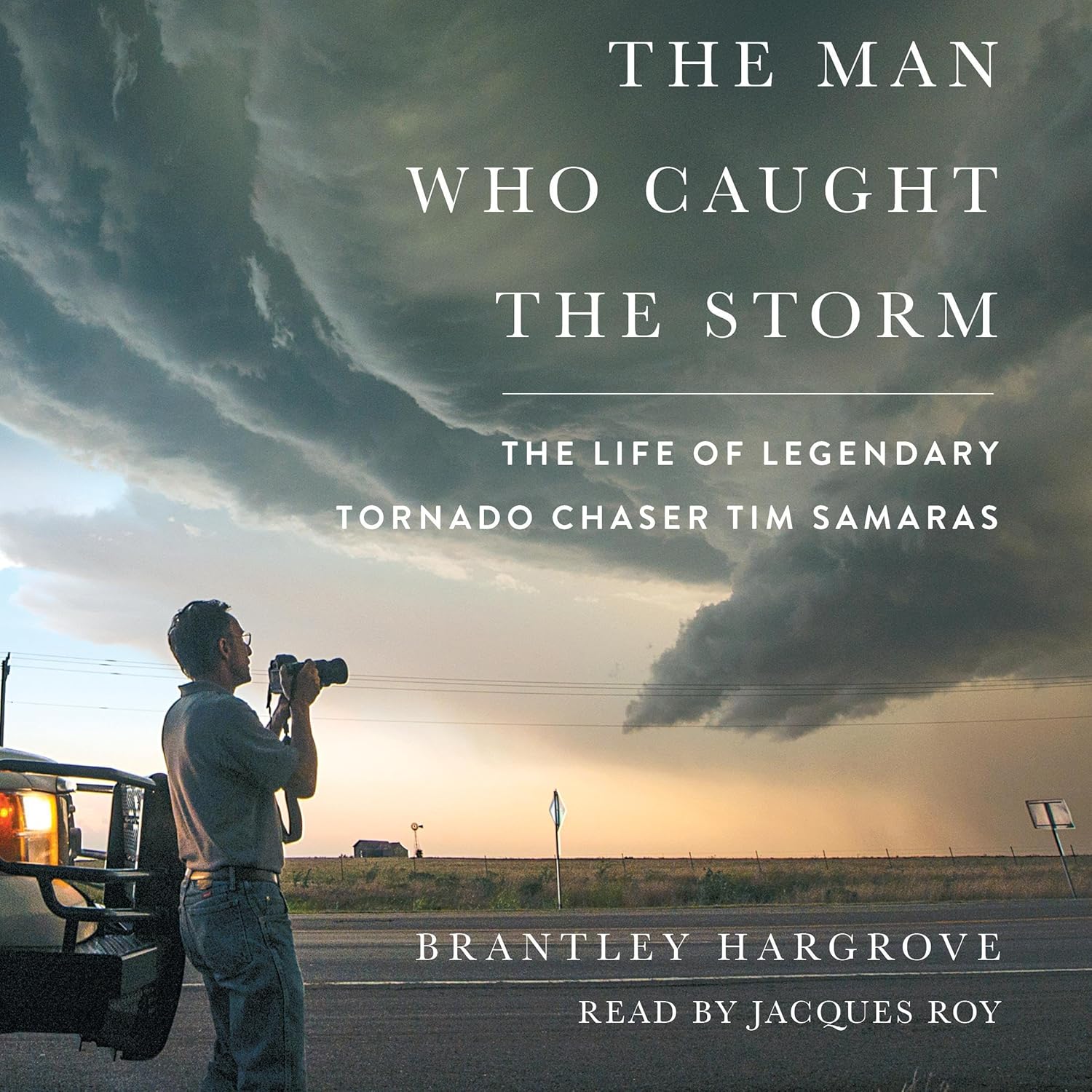
The Man Who Caught the Storm**** by Brantley Hargrove: The biography and adventures of a tornado chaser-- Tim Samaras. Without formal education, Samaras's obsession with tornados leads him to develop devices and methods to measure a tornado's characteristics for the purpose of scientific advancement. I've never understood how a tornado chaser is in the right place at the right time, and now I sort of get how they monitor the atmosphere so as to try to catch a violent storm. It's not an occupation for the faint of heart. Fascinating story.

Survivors Club**** by Michael Bornstein: Bornstein was a young survivor who made it out of Auschwitz after being hidden and guarded by his grandmother. Though he was only pre-school age, his memory of certain events is sharp. Serendipity placed him in the infirmary when the camp was emptied to become a forced march near the end of the war. He is convinced he would not have survived the march. His story combines his personal memories with research into details of what happened to Jews during the Holocaust years.

Grant***** by Ron Chernow (2nd reading-listening): 48 hours baby! Because July and August were so busy w/ guests and then camping and visiting family, it took me several months to get through this audio book. Author examines Grants life in deep detail, warts and all. His well-known drinking problem waxed and waned.
What rarely seemed to wane was his lack of guile. He strived to live a life of rightness and fairness and trust. And that is why some corrupt individuals were able to enrich themselves right under his nose. And that has given a bad name to his "corrupt" administration, when it was not Grant doing the corrupting. His supposed trusted friends betrayed him again and again, at one point leaving him penniless in his later years.
Pre-Civil War Grant struggled to support his family. The military roles handed to him during the Civil War magnified his talents, and how sorely a gifted general was needed by Lincoln. He was rewarded for his esteemed military role after the war by wealthy benefactors, and eventually was "rewarded" with the presidency of the United States.
Grant was a loving family man, honest and upright, humble, and never sought fame. I think Chernow's book has rolled all the things into one in this book.

Facing the Mountain***** by Daniel James Brown: My awareness and knowledge of the experience of Isei and Nisei (Japanese born, or American-born of Japanese descent) during the World War 2 years has been greatly expanded by this book. Not only were west coast Japanese and Americans of Japanese descent deported to work camps or concentration camps around the US, but thousands of their young men fought the Germans and Italians in Europe as members of the US Army. And that happened while their families in the US were still confined to the camps, having lost their freedom, their homes, livelihoods, dignity and self-respect.
Because our country has not defeated the plague of racism, everyone must read this book or another than factually demonstrates the poison of racism. I can't fathom why a person would judge a whole group or race based on misinformation, or on the poor behavior of just a few of a given race. It's incomprehensible to me. And inexcusable.

Pronoun Trouble*** by John McWhorter: The evolution of pronouns in our language, and in others, is examined. It's very detailed and not being a linguist some of the info was above me. He spends a fair amount of time on why saying, "me and Suzy went to the store" is not wrong, when those of my age were taught to never use "me" in that way. "Suzy and I went to the store" is my generation's style.
Much time is spent on why "they" can be singular, as in someone asks to be called they so as to not denote gender. I don't have a problem with that except for one thing--it's hard for an oldster like me to remember small details like this, so if I met people in a group where some wanted to be called they, I'd probably mess up and call them him or her. So I would hope a person asking for "they" could not take offense when I forget. After all they are putting the burden on me to remember personal details, a burden I would rather not carry.

In Covid's Wake*** by Stephen Macedo & Frances Lee: Another post-Covid 19 book examining what we did wrong or right during the several years of the pandemic. Lots of detail here. We now know that some of what we were told at the time was incorrect, or downright wrong. Some of it was right. Politics contributed to the confusion.
I personally think it was wrong for people to be so rabidly critical in the early months, on how experts handled the pandemic. One day a theory about a way to combat it was put forth, and the next week or month we were told the opposite. But no one really knew much about the best way to treat Covid-19, yet some acted like experts should know it all on Day 1. It's true that most of Trump's followers think he handled the pandemic brilliantly, and I think his pushing the vaccine forward was an amazing feat. But I resent that he told the American people approximately 20 times that the disease would go away. Later he said he did not want to tell us the truth because we would panic, which is the ultimate insult from a leader. People tend to "panic" when they don't have information, not when they do have it. We deserved to know.

Waste Wars**** by Alexander Clapp: The truth, as the author sees it, about what happens to the waste generated in prosperous countries such as the US. It is shocking that even in our day of greater awareness that humans generate too much garbage, there is ample opportunity to be that unthinking person who discards re-usable items willy-nilly. I hear of people throwing away clothing because it's too much trouble to drop at Goodwill, or retailers like Costco whose products are often so over-packaged that trying to open one can be almost fatal. Many require a ripper that could slice an artery, in order to get the bleepity-bleep product out of its package. I have been in offices that keep a stack of those huge red solo cups on top of the water cooler. Someone takes a sip of water and throws away the cup. An hour later they are back for another sip out of another cup. Sheesh.
Anyway, much of the book concerns what is happening in poor countries that have agreed to take in our garbage. Paper and steel are very recyclable. But plastic is not, so much of it is burned just to get rid of it. The people in the area breathe in poisonous fumes, and their soil is sometimes made unusable as well. Most of us don't think a thing about this. We dutifully put items in our recycle barrel and never give it another thought.
Waste Wars is a short book with a lot to say!

Everything is Tuberculosis***** by John Green: I read this book about TB because it took the lives of a number of my ancestors, and afflicted many in their communities. It's a disease more likely to affect the poor who live in crowded conditions. Three of my great-grandparents died of it--two were Irish, who tended to reside in small quarters with lots of relatives. Another was my Carpatho-Rusyn great-grandfather. He died at age 29, two months before his son, my grandfather, was born. He too lived in a multi-family dwelling. My own Irish grandfather lived most of his life with inactive TB that fortunately never developed into the disease. It was his two Irish parents mentioned above who died of TB before my grandfather was fully past his toddler years.
I did not know the level of suffering that comes to those dying of TB. It's called "the wasting disease" or consumption, for a reason. Victims lose their appetites, causing loss of weight and energy, and eventually death, although if you're lucky enough to live in a Western country, you are unlikely to die of it now. We have treatments that are unavailable in the poorest areas of the world. As it consumes the body, TB causes the sufferer to cough up blood as the lungs deteriorate. A patient has chest pain, sweats profusely, is chilled, and is breathless, eventually succumbing to suffocation.
The book profiles some TB victims who the author was acquainted with. This was actually quite moving, to come to care about these people who fought the disease.

The Illegals***1/2 by Shaun Walker: I have watched plenty of spy movies and read a ton of spy fiction and non-fiction. And I lived through the decades when the threat of Soviet spies was on the conscious level of American thought. This book relates the extent to which the Soviets trained their spies and level of success and failure their infiltration became. Author gives personal stories of the extreme sacrifices their spies gave for the mother country. Near the end of the book he touches on virtual spying. That would be an interesting book to read.


Orbital***by Samantha Harvey: I'm not a big fan of fiction, yet sometimes I give in to the urging of others to read certain fiction books. Though I can't rave about this one, it is so unusual, and beautiful in a way, that I actually did enjoy reading it. The author skillfully portrays what being in a space capsule is like, and she describes it so well that I had the pictures in my mind, seeing what the astronauts were seeing, and feeling what they felt. Her descriptions of the earth from space are so vivid and lovely.


