Sunday, November 20, 2016

270 or Bust: Electoral College Or Not??


Susanne from North Carolina suggested remarks on this topic.

In my opinion the Electoral College serves a purpose in our country that is as appropriate now as it was when adopted in 1787.  It seems weird to us, that our popular vote doesn't elect the president directly.  Even more so every time the popular vote count is the inverse of the Electoral College result, as happened in 2000, and again a few weeks ago.  It also occurred in 1876 and 1888, and in 1824 (which btw, was the only time the election of an American president was thrown to the House of Representatives).

I don't pretend to understand all aspects of the E.C., but here are some facts and thoughts:

The government of the United States is wisely state-based and population-based, which prevents larger states from controlling all of the issues facing our country.  Every state has 2 Senators regardless of size, and each has Representatives in proportion to its population. The E.C. is in place for the same purpose.  Without it the population centers of the country would elect each president, meaning New York and the Eastern Seaboard, California, Chicago, Miami, Phoenix, Houston and Seattle would determine the winner in national elections.

If there is apathy towards voting in 2016,  imagine a national election without the E.C. giving a voice to every part of the US.  Voters in rural states might as well stay home.  If low-population areas see few national candidates on campaign routes now, without the E.C. in place, candidates wouldn't even bother to campaign in areas whose numbers are so low it's hardly worth their time.

Barbara Boxer, Democratic Senator from California recently said, "The Electoral College is an outdated, undemocratic system that does not reflect our modern society, and it needs to change immediately. Every American should be guaranteed that their vote counts." She hasn't done much research on the E.C. if she thinks that every American vote will become more significant without it.  The Founding Fathers put this system in place to ensure that we all have a voice.

Watch this video for a clear explanation of the Electoral College.


Saturday, November 19, 2016

Grandchildren 2016

Holland, 0 1/2


Cora, 2 1/2
[Cora just woke up from a nap in this photo]


Sage, 2


Sterling, 3


Shiloh, 6


Paisley, 7 1/2


 Magda, 8


 Eli, 9 1/2

Miriam, 11


Jonah, 13 1/2

Brooklyn, 15 1/2

Friday, November 18, 2016

The Most Bizarre Kidnapping and the Dumbest Bank Robbery Ever


I'll describe two different incidences here, and their common thread is the bizarre thinking process of the perpetrators in an effort to get free money, and their blindness as to the consequences.  The first:


In the summer of 1976 a school bus full of  children in rural Chowchilla California disappeared.  The bus was transporting the children home from summer school, but the children never arrived at their destinations.  A huge outpouring of police and civilians searched every road, field, farm, and building in the area and came up empty.  It was as if a magician had waved his wand and poof, 26 children and a bus driver vanished.

Several days later a guard stationed in a rock quarry in Livermore California saw some children walking toward him and knew right away they were the missing children from Chowchilla.  His words to them: "This world's been looking for you."  Three kidnappers were arrested, tried and convicted.

What happened to these children was dreadful, and the plan so bizarre, it resembled low-brow fiction.  The bus had been commandeered by three masked men and driven to a hidden location.  The children were loaded into two vans and driven around for 11 hours.  They could see nothing and were not told any information by the perps.

They ended up at the Livermore quarry where the children were forced to climb down into a moving van buried underground.  Once they were secured inside the perps told the children to shut up and be quiet, and then they buried the van under several feet of dirt.  No one would ever spot the van the way it was concealed.

The purpose of the kidnapping was ransom yet ransom demands were not received by the police.  The bus driver and children were able to dig their way out.  I've wondered how these guys could think they planned the perfect crime when it turned out that the quarry was owned by the family of one of the perps and the moving van was registered in his name.


Second story:

This one involves a former neighbor of mine, D.  He was an oddball kind of guy who seemed uninterested in getting to know me or anyone else.  One day the news went around that he was arrested for a local robbery.  He was a heroin addict and I guess the only way he thought he could support his habit was to hit the bank.

A few weeks earlier D's teenage son and friend were watching a movie featuring a bank robbery.  D commented that they could do their own robbery, and he made the plans, drawing in the two boys.  Stupidly, D chose a bank a few blocks from home, yeah, in a high traffic area with lots of stoplights.  Not the best scenario for a quick anonymous get-away.

They were caught a couple of blocks away within a few minutes of the robbery.  D is now in prison for 22 years.  Unfortunately the teenagers also received sentences.  D's son drove the getaway car and received five years.  The other boy, who went into the bank with D (both were masked and armed) received ten years.   At his sentencing D blamed the teens--he said it was their idea and he just went along with it.  The judge laid into him for daring to blame children for his crime.

D will have plenty of time to think about his dopey ideas and how he messed up the lives of two teenagers.  Nothing about his life says 'smart.'  Maybe he's not even smart enough to recognize how dumb he is.


Thursday, November 17, 2016

Long-Time Oregonians Remember

You're a long-time Oregonian if you remember any of these:

* the Vanport Flood, Memorial Day 1948


* the 1962 Columbus Day storm

*  RFK's Oregon campaign stop, shortly before his assassination in 1968


* Governor Tom McCall's 1971 non-invitation to tourists: ". . . Come again and again. But for heaven's sake, don't move here to live. . ."


* the 1977 Trail Blazer NBA Championship (and have the t-shirt to prove it!)


* the 1980  eruption of Mt. St. Helens and the subsequent ashy gray Rose Festival parade

*the old and the older iconic Portland sign:
 
                                                                     THEN

NOW


* Portland Mayor Bud Clark's 1978 "expose yourself to art" poster
 

* walking out of the PDX passenger terminal to see Mt. Hood in all its glory (a view now obscured by a modern multi-story parking garage)

* Portlandia's 1985 arrival via barge on the Willamette River to its home in downtown PDX 


* the classy law-abiding, service-oriented Trail Blazer pro basketball team of the late 1980s

* the words to "Rip City Rhapsody" and the famous phrase uttered by "The Schonz"


*riding MAX for free one crazy evening during its PDX grand-opening in 1985


* the 1996 flood and "Vera's Wall"


* riding the MAX for free again, this time during its West-side opening in 1998

Wednesday, November 16, 2016

What's an Oregonian?

Whether you were born and raised here or not, you know you're an Oregonian at heart if you:

* rescue recyclables from the trash and bring home cardboard, bottles, and newspapers from places without recycling programs

* lose sleep at night because of that piece of paper accidentally put in the trash
 

* suffer mightily when the temp is over 70 degrees, and welcome relief from the heat in the form of deary black clouds and pouring rain


* carry on, rain or shine, even if it means climbing Saddle Mountain in a deluge, because that is what you planned for the day


* are severely vitamin D deficient


* know what the UGB is

Urban Growth Boundary

* go insane when traveling in an unplanned, sprawling, traffic-choked unrestrained metropolis (Salt Lake Valley, Phoenix, Southern California, etc.)

* feel compelled to explain to Easterners why school is cancelled with a sparse inch of snow on the ground (hilly terrain, no chains for school buses, only 2 snowplows cover 3 entire counties, etc.)
in  the 32 years living in my current house, I have seen one of these things in my area exactly once, and that was on about the 12th day of our 14-day snow fall in 2008

*leave work the second you hear forecast of an ice storm so that you can hunker down at home before the apocalypse begins


* wardrobe is almost exclusively Columbia Sportswear, or maybe Nike if you are tall and skinny


* can't stomach fast food except for Burgerville USA


* are out walking, running, hiking or cycling in non-Oregon places, and suddenly feel weird because the place is an eerie ghost town; you get to wondering if you missed the nuclear war memo, and everyone else is hunkered down in bomb shelters

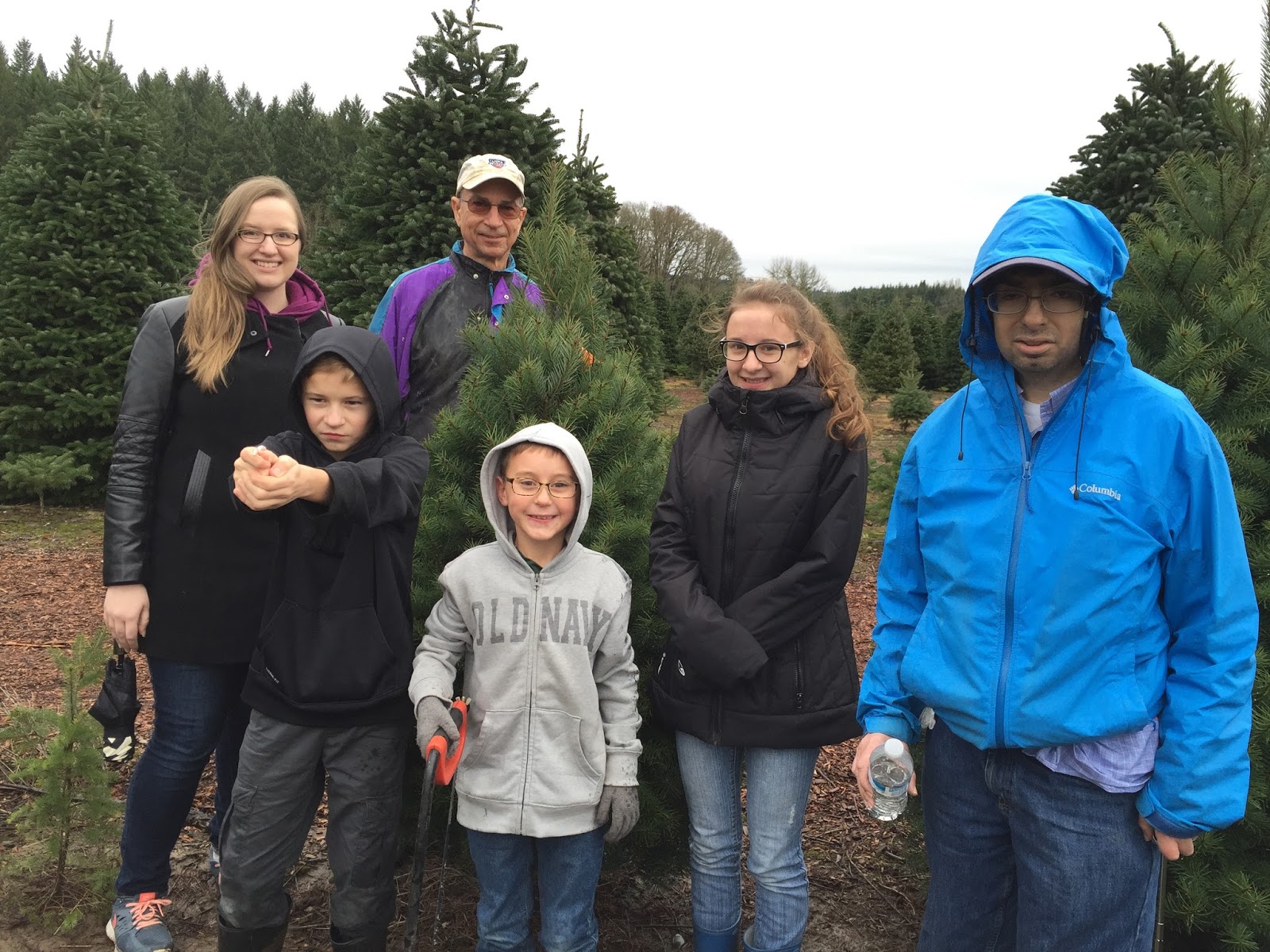
* cut your own Christmas tree from a nearby tree farm and enjoy the bonfire and hot chocolate that comes with

* pick your own fruit from nearby farms


* know why Portland is sometimes referred to as stumptown 
 why did 19th century settlers think a clean sweep was a good idea?

* shop with re-usable bags or carry an arm full of items out of the store with no bag at all
 

* know how to pronounce Willamette, Siskiyou, Clatskanie, Klickitat, Aloha, Champoeg, Detroit, Scio, Siuslaw, Tigard, Yachats, Couch
[Will-LAM-ett, SIS-k-you, CLAT-ska-nye, KLICK-i-tat, A-LOH-a, Sham-POO-ee, DEE-troit, SIGH-oh, Sigh-YEW-slaw, TIE-gurd, YAH-hots, Kootch]


* think a 5-minute traffic jam is intolerable and consider moving to the Yukon


* have your own brick at Pioneer Courthouse Square, or have seen one belonging to someone you know

* attend your local county fair

* wear either green/yellow or orange/black and are proud of the dorky sports team names, DUCKS and BEAVERS

*relish drinking Bull Run water out of your kitchen faucet--it's tastier and purer than that stuff you can buy in bottles--it comes right off the slopes of Mt. Hood; we have had visitors from other states bringing empty gallon jugs that they take home full of Bull Run water


I have now lived here for over half my life.  Guess that makes me an Oregonian aside from all the above!

Tuesday, November 15, 2016

A Perfect Storm in 1920 Brattleboro, Vermont

A swell Sunday drive: my Grandpa, James Ashe, is standing in the rear, his cousin Catherine Brosnahan is standing at left, and seated are his aunt and uncle, Catherine and John Sullivan; my date estimation is the late 19-teens

Back in the day small-town newspapers broadcast the private affairs of local citizens in what was commonly called "the personal column," or just "personals."  You could discover your neighbor's vacation plans, read about their illnesses and hospitalizations, their visitors, their loss of a job or the luck of finding new employment.  The personals would tell you who traveled to attend a funeral, a wedding, or for business.  Maybe you could even find out how your grandparents met for the first time!  Yes, you could mine this precious nugget.

My Grandma Ashe--Alice Estelle Toomey--told me that she met my Grandpa--James Matthew Ashe--when they both chanced to travel to Brattleboro Vermont the same weekend to visit a mutual cousin, Mary Sullivan Cook.  A mutual cousin?   Yes, but my grandparents were not cousins of each other. Huh?

Alice was a born-and-raised Brooklyn-ite and she and her friend Lillian Fry took the train to Brattleboro, Vermont, to visit Gram's cousin Mary.  Jim was a born-and-raised Holyoke, Massachusetts man.  He and his Uncle Steve Doyle traveled by car to Brattleboro for a visit to Jim's cousin Mary.   A perfect storm converged on Mary Sullivan Cook's Williams Street house on a hot August day in 1920.

Mary suggested the four of them go for a drive in Steve Doyle's car.  There was room for only two so Alice jumped into the car with Jim; Steve was a much older man who didn't appeal to her.  Lillian and Steve went for a walk while Alice and James changed our family history. And that's the end of Alice's story.  Well, not exactly.  They eventually married and had three children.

One day I was perusing on microfilm The Vermont Phoenix newspaper, published in Brattleboro, scanning for snippets on relatives and their neighbors.  My eyes bugged out when I saw: "James Ashe and Stephen Doyle of Holyoke, Mass., were guests Sunday of Mr. and Mrs. Charles F. Cook, coming by automobile."  Wow, could it be?  Could this be the occasion of my Grandparents' first meeting?

The answer is: yes, it could.  A few lines down I read, "Miss Lillian Frye and Miss Alice Toomey of Brooklyn came Saturday for a two weeks' visit with Mr. and Mrs. Charles F. Cook of Williams street."  So there it is.  My Grandparents met on Sunday, August 1, 1920 at their Cousin Mary's house at 33 Williams St., Brattleboro Vermont.  Alice must have been pretty close to Mary, because she and Lillian stayed two weeks!  Yikes.  Mary's house wasn't big.  Alice had other relatives in town, and the streets were very walkable.  Much of their time could have been spent out of the house.

As to how each of my Grandparents was related to Mary Sullivan Cook, it's loose and complicated connection, so I'll just say that Jim's aunt Mary Doyle Brosnahan was was a cousin-in-law of Mary Sullivan Cook's mother.  I told you it was loose.

On Alice's side, Mary Sullivan Cook was related to Alice's mother, also named Mary Sullivan, but even more indirectly than Jim's connection.

Irish records being the black hole that they are, these murky relationships are hard to define.  However, the good news is that the Holy Grail has been delivered.  A few months ago, the original images of Irish Catholic parish records were made public online for the first time.  It will take a while, but I hope that careful searching will reveal the exact relationship of Alice to Mary Sullivan Cook.

My Grandparents did not marry for three years after their meeting.  Wish I knew more about their three-year courtship.  Jim was working in the theatre district in New York as of 1920, at least part of the time.  Perhaps during his off-hours he hopped on the subway to Brooklyn to spend the day with Alice.

I do have this photo dated 1921, a year into their relationship.  I thought it  was taken on the farm belonging to Jim's cousins in South Hadley, Massachusetts, but a cousin told me recently it is not that farm.  Perhaps further scanning of The Vermont Phoenix and an examination of The Holyoke Transcript will reveal more details about my Grandparents.  You never know what you will uncover in the pages of an old newspaper.


Monday, November 14, 2016

The Crystal Ball of History

Working backwards in time is the method by which family history is done.  The beginning of a life can be discovered only when the end is revealed.  The sunset of a life story is known before the dawn.  Terrible events and unpleasant endings to life are common; if only a researcher could travel back to an earlier time to warn the now dead, or even prevent the dangerous and harmful events that occurred in their lives.  Of course it can't be done.

Cornelius Flanagan
Cornelius Flannigan grew up in Brattleboro Vermont of Irish parentage.  In his 70th year he lived alone on a small island in the middle of the Connecticut River.  The island was connected to both the Vermont and New Hampshire shores by the Hinsdale Bridge, which was anchored halfway across at the island.  In the late winter of 1920 ice clogged the river, imperiling the stability of the bridge.

Cornelius spent a day in town, then headed home late that March evening.  A sheriff deputy saw him heading toward the bridge and home and warned him not to cross the bridge as it was being inched away from it's mooring by pressure from the ice.  At the bridge another sheriff announced the span would probably fail soon, and he must not cross.  Cornelius inspected the mooring carefully, then proceeded ahead.  Halfway across the unstable planks he changed his mind.  He ran back toward the shore as the bridge began to heave.  He never made it, and was carried to his death on the wrecked span under the surging ice jam.

After reading this in a 1920 newspaper, I found Cornelius on four or five census records beginning when he was a child of eleven.  I visualized his happy disposition and cherished spot as the only son in his family.  But I had already discovered his unpleasant, icy end, and in my mind the words, "don't cross that bridge!" jumped out of my brain.  I was as a gypsy fortune teller looking at his name on the page, able to predict his frozen demise.
Ice jam on the Winooski River, similar to the ice jam on the Connecticut River in 1920


Maurice Ferriter and Michael Griffin
Maurice Ferriter and Michael Griffin were two of scores of Irish children growing up in 1870 Brattleboro.  Irish parents did not have the luxury of showering attention on their children, so they were left to roam--the original 'free-range' children in today's parlance.  Fathers worked excessive hours on the railroad, in the slate quarry, or in one of the organ, chair, or peg factories clustered near the confluence of the Whetstone Brook and Connecticut River.  Mothers toiled ceaselessly to feed their families, launder, maintain their humble homes, and do piecework for the wealthier folks who lived uptown.

On a fall day in 1870 Maurice and Michael were part of a group of children out roaming the Irish patch (neighborhood).  In one of their homes Michael spied a rifle leaning upright in a corner of the room.  He picked it up and in jest, pointed it at Maurice and pretended to shoot.  The gun went off and where a rambunctious Maurice had stood was his heaped, bloody, whitening corpse.

Michael ran in panic from the horror and was found late that day hiding in the woods.  He couldn't be blamed for his impulsive, childish act, yet he was never right again.  Just weeks later he was killed in the train yard by a moving locomotive.

It's eerie then to discover this terrible accident, and then moving back in time, to see these two carefree boys enumerated with their families on the 1870 Census, and then to find their birth information.  In my mind's eye I could see them toddling around the kitchen, attending the town school, and enjoying the liberty granted to children back in the day.

These are two of countless instances of a warped kind of prescience that dogs me and other family historians when we dive into the records of the past. 

The train yard where Michael met his end.  Photo is later, circa 1900; gas house is on the left, depot in center.  Michael and Maurice lived in the distance (past the depot) to the right of the tracks.